


Bathrooms & Care Equipment
What Is a Height-Adjustable Changing Table?
A practical UK guide to powered changing tables for schools, nurseries, day-care and specialist care environments, including what height adjustment changes and what to compare before specifying.
01
Quick Answer
A height-adjustable changing table is a changing or nursing surface that can be raised and lowered to suit the person receiving care and the person assisting them. Powered adjustment can reduce unnecessary bending, help create a more comfortable working height and make one changing area more adaptable for different users.
The basic idea
A changing surface that comes to the right working height
A conventional changing table is installed at one fixed height. That may work for one member of staff or one routine, but it cannot respond when the user, carer or task changes.
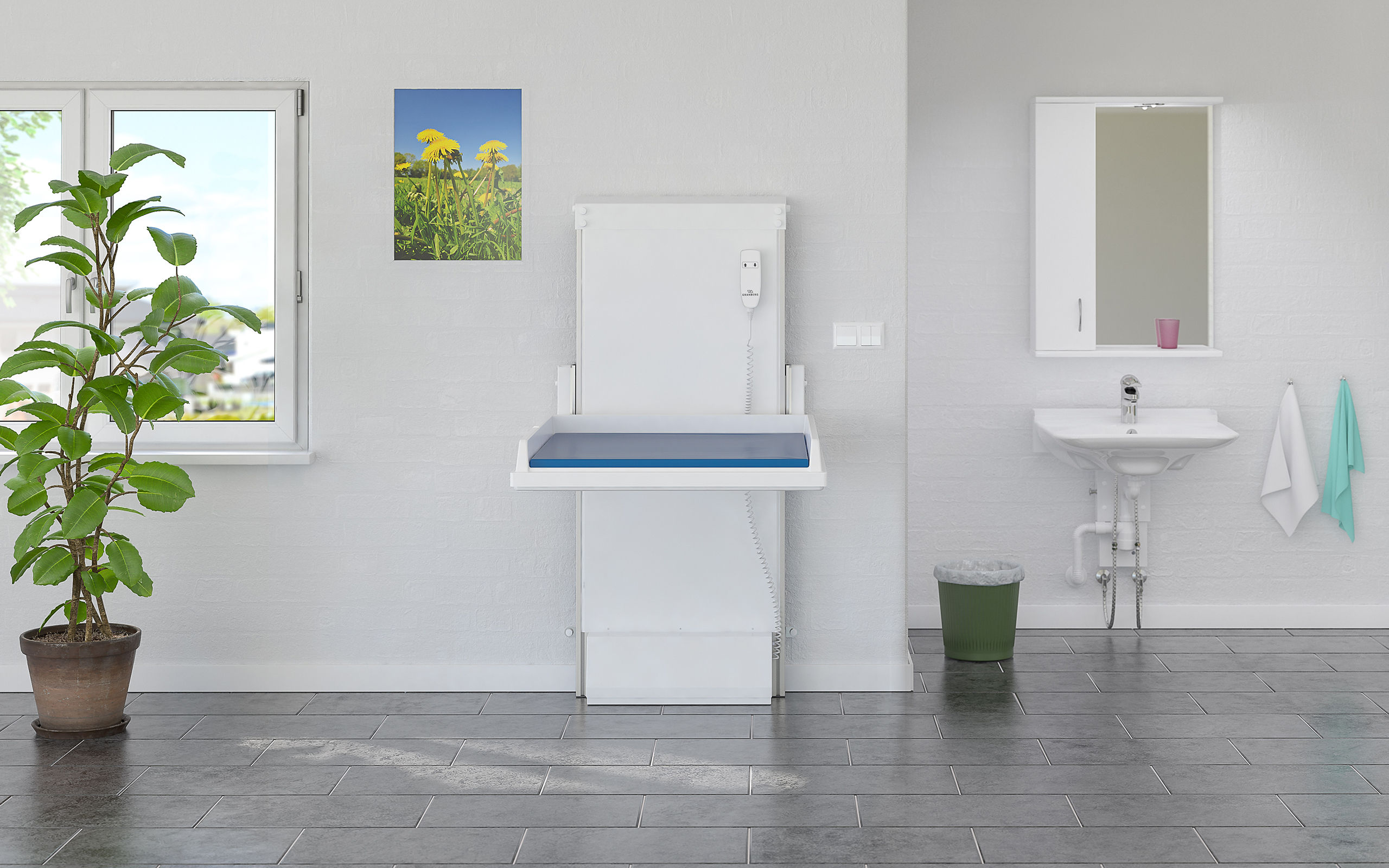
A height-adjustable changing table adds vertical movement to the changing surface. In current Granberg day-care systems sold by Independent 4 Life, this movement is electrically powered. Depending on the exact model and configuration, the table can be supplied as a simple changing surface or combined with features such as a mattress, access ladder, storage baskets, higher border protection and a washing sink.
The important point is not simply that the table moves. It is that the working position can be set around the people using it rather than forcing every changing task to happen at one fixed height.
Why adjustability matters
Height affects access, effort and the way care is delivered
01
Working height
Raising the surface can help the assisting adult work closer to a comfortable standing position instead of repeatedly bending over a low fixed table.
02
Supported access
Lower positions can be useful when access to the surface, a transfer method or an integrated ladder needs to be considered as part of the routine.
03
Multi-user settings
Schools, nurseries and care settings may have different staff and different users throughout the day. Adjustment makes one station more flexible.
Height adjustment does not replace a full risk assessment.
The correct table, load rating, transfer method, edge protection, supervision and room layout still need to be selected around the actual user and care routine.
Specification checklist
What should you compare before choosing a changing table?
| Check | Why it matters | Questions to ask |
|---|---|---|
| Working-height range | Determines how high and low the surface can be positioned. | Does the full range suit the users, carers and transfer method? |
| Table dimensions | Affects usable changing space and the room footprint. | Is the surface long and wide enough without blocking circulation? |
| Maximum load | Load ratings are product-specific and should never be assumed. | Does the published maximum load comfortably cover the intended use? |
| Border / edge arrangement | Different models and accessories provide different edge heights and configurations. | What level of edge protection is required for the intended routine? |
| Access ladder | Selected tables can use an extendable ladder for users who can climb onto the surface with supervision. | Is ladder access appropriate, and which side should it be on? |
| Sink and hand shower | Integrated washing can keep cleaning and changing tasks within one station. | Are water, waste and service positions available where the table will sit? |
| Storage | Frequently used items are easier to manage when they are kept close to the changing area. | Are pull-out baskets or adjacent storage required? |
| Cleaning and hygiene | The surface and accessories need to suit repeated cleaning in the intended setting. | How will the table, mattress, sink and surrounding floor be cleaned? |
Comparison
Height-adjustable vs fixed-height changing tables
A fixed-height table can be a sensible option where the working height is already known, the same routine is repeated consistently and powered movement is unnecessary. It is also mechanically simpler.
A height-adjustable table becomes more valuable where several staff members use the station, where users vary in size or access method, or where the changing surface needs to move between an access position and a more comfortable working position.
A
Choose fixed height when...
The required working position is stable, the user group is predictable and adjustability would add little practical benefit.
B
Choose adjustable when...
The same table must adapt around different users, staff heights, access methods or changing routines.
C
Look beyond the lift
Whichever format you choose, room layout, supervision, cleaning, transfer space and the exact product load rating still matter.
Real product example
Granberg 333: what a current height-adjustable table can include
Example from the I4L range
Granberg 333 height-adjustable changing table
The 800 x 800mm Granberg 333 listed by Independent 4 Life uses electric adjustment through a 400mm range, from 720mm to 1120mm working height, and has a published maximum load of 50kg. Current options across the wider 333 family include storage baskets, ladders, higher transparent edge inserts and larger versions with an integrated sink.
- Electric height adjustment
- Free-standing installation with adjustable feet
- Easy-clean changing surface
- Configurations for schools, nurseries and day-care centres
Always use the technical information for the exact product and configuration being specified. Dimensions, load ratings, accessories and service requirements vary across models.
Where they are used
Who are height-adjustable changing tables for?
These systems are particularly relevant where changing support is part of a regular routine and the room needs to work safely for both the person receiving care and the people providing it.
01
Schools & specialist education
Useful where pupils have changing or personal-care requirements and staff need a consistent, practical working area.
02
Nurseries & day-care
Powered working-height adjustment can help a frequently used changing station adapt around different staff and routines.
03
Care & specialist settings
Where needs are more complex, the changing table may form part of a wider care environment alongside washing, transfer or showering equipment.
Frequently asked questions
Height-adjustable changing table FAQs
Are all height-adjustable changing tables the same size?
No. Width, depth, height range, border arrangement and accessories vary by model. Compare the exact dimensions against the room and intended user.
Do height-adjustable changing tables need plumbing?
Not always. A simple changing table may only require a suitable electrical supply. Versions with an integrated sink or hand shower also require water and waste connections.
Can a changing table include storage?
Yes. Selected Granberg configurations can be supplied with pull-out wire baskets and other accessories so frequently used items remain close to the changing area.
Can I see one before specifying?
Independent 4 Life's Petersfield showroom includes height-adjustable changing equipment. You can visit in person, use the 3D showroom or arrange a guided video tour.
Continue learning