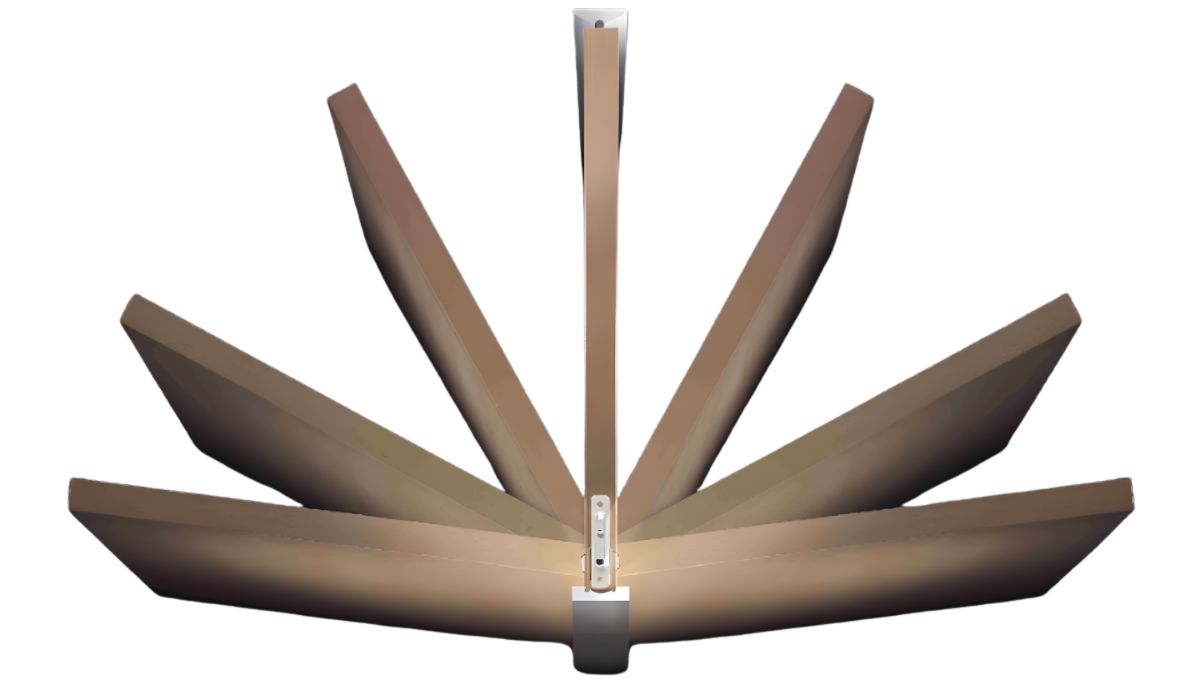
Specialist locks, double-action pivot hinges and emergency release door stops for accessible toilets, bathrooms, care environments and other spaces where everyday privacy needs to coexist with safe emergency access.
01 Lock & indicate Privacy and easy operation during normal use
02 Pivot both ways Allow the door leaf to move in either direction
03 Release the stop Enable reverse opening when emergency access is needed
Small components. Important behaviour.
Accessibility at a doorway is not only about how wide it opens
Door hardware determines how easily the door can be operated, whether the room clearly shows that it is occupied and, in some situations, whether somebody outside can gain access when the normal opening direction has become obstructed.
This is particularly important around toilets, bathrooms and care environments. If somebody falls behind an inward-opening door, the door itself can become the barrier preventing assistance.
Locks, hinges and emergency-release stops therefore need to be considered as parts of the same doorway rather than isolated items of ironmongery.
Think about three layers
Handle. Movement. Emergency release.
01
How is the door operated? Consider grip, hand dexterity, operating force, privacy indicator and external emergency release.
02
Which directions can it move? Conventional hinges and double-action pivot systems create fundamentally different door behaviour.
03
What happens in an emergency? Where reverse opening is part of the design, the stop and pivot system have to work together.
Normal use versus emergency access
One doorway can be designed to behave in two different ways
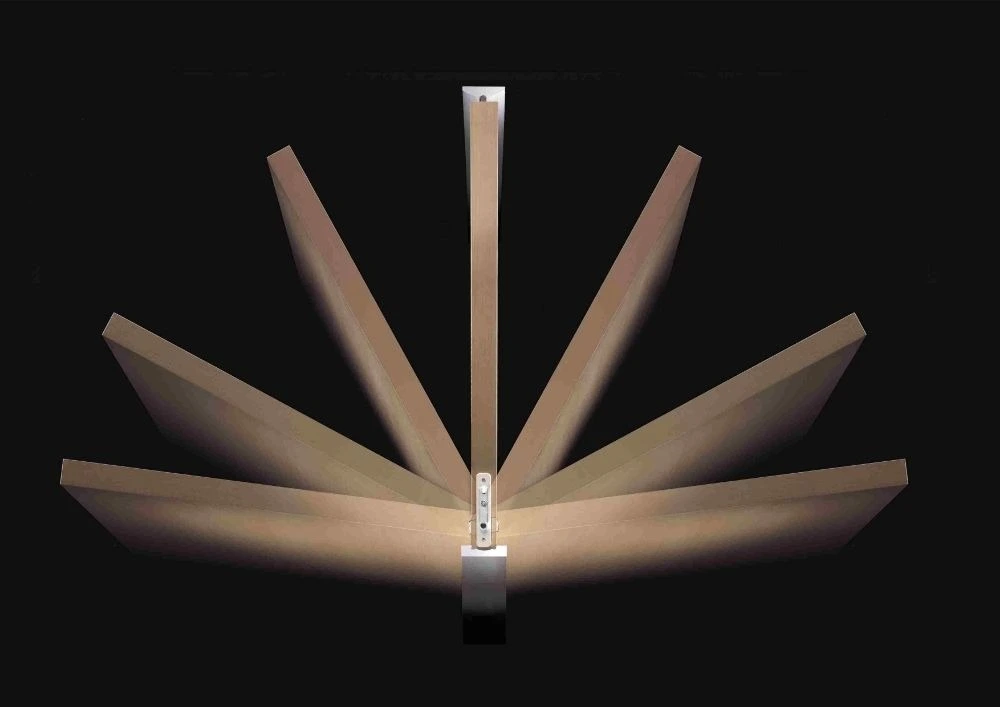
A double-action pivot and emergency-release stop can allow a door
to behave conventionally during everyday use while retaining the
ability to swing in the opposite direction when access is obstructed.
Everyday use
The stop defines the normal opening side
During normal use, the projecting door stop prevents the
double-action leaf from passing through the closed position into
the opposite opening direction.
The pivot remains fixed at the left jamb. In normal use, the
projecting stop keeps the leaf on its intended side of the
doorway.
Emergency use
Release the stop and reverse the opening direction
If the normal swing is obstructed, the emergency stop can be
released so the same pivoted leaf is free to move through the
closed position and open in the opposite direction.
Nothing happens to the pivot itself. Releasing the stop simply
allows the same door leaf to travel onto the opposite side of
its closed position.
Start here
Explore door and frame fittings
Choose accessible locking and operating furniture, double-action pivot hardware or emergency-release frame fittings according to how the complete doorway needs to function.
Not every project needs every component, but emergency-release bathroom doors are easiest to understand when each part is given a clearly defined job.
01
At hand height
Lock / latch / handle
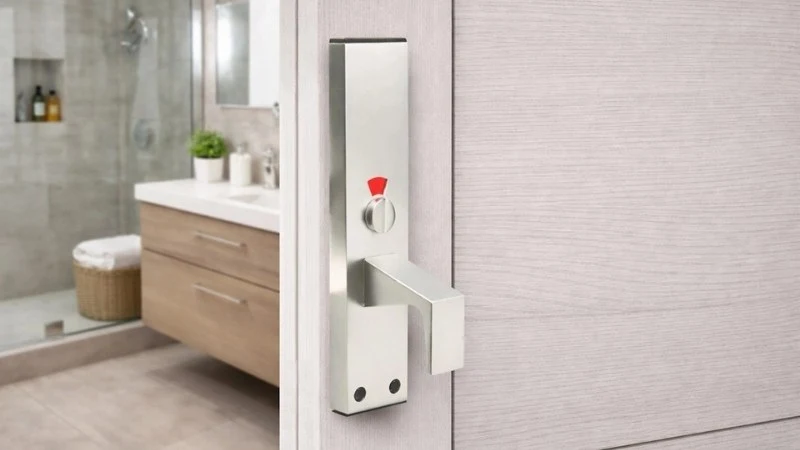
Provides everyday operation and privacy. Depending on the selected product, accessible features can include larger controls, occupancy indication and an external emergency release.
02
At the door pivots
Double-action pivot set
Changes the fundamental movement of the leaf by allowing a correctly prepared door to rotate in either direction rather than being limited by a conventional one-way butt hinge.
03
At the frame
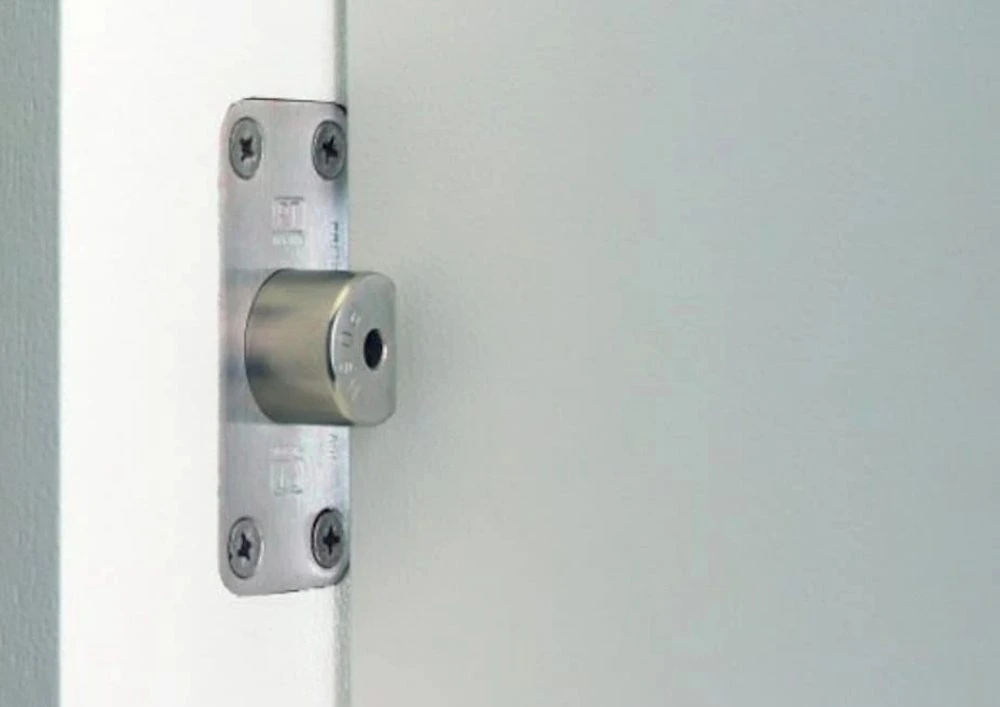
Emergency-release stop
Provides the normal stopping point during everyday operation, then releases when reverse opening is required for emergency access.
Accessible door furniture
A small control can make a large difference to usability
Toilet and bathroom hardware should be considered from both sides of the door: how easily the user can operate it from inside, and how clearly or quickly somebody outside can understand or override the lock when necessary.
01
Larger operating surfaces
Paddle and extended thumb-turn designs can offer more surface area to operate than a small conventional bathroom turn.
02
Occupancy indication
Indicator furniture provides a clear visual cue that the toilet or bathroom is occupied.
03
External emergency release
Selected accessible toilet locking sets allow the locked door to be released from outside in an emergency.
04
Compatible locking components
Mortice locks, roller bolts, two-way striking plates and lever furniture need to be chosen as compatible components rather than simply mixed by appearance.
One fixed pivot axis supports both movements. The solid blue leaf
shows the normal opening direction; the lighter leaf shows the reverse
opening available when the doorway hardware permits it.
Double-action door movement
The hinge determines whether emergency reverse opening is possible
A push-in emergency stop cannot create reverse door movement by itself. The door must already be hung on suitable double-action pivot hardware so the leaf is capable of swinging in the opposing direction when the stop is released.
Door weight matters Choose pivot hardware with a capacity and configuration suitable for the exact door leaf.
Mounting arrangement matters Current systems include different centre, frame and floor-mounted pivot arrangements.
Door preparation matters Edge radii, clearances, brackets and preparation vary between pivot sets and should follow the manufacturer's instructions.
Fire-door suitability is product specific Where a fire-rated door is involved, use only a pivot system and complete configuration approved for that application.
Emergency-release frame hardware
The door stop is what makes normal use and emergency use coexist
In normal operation, the stop prevents the double-action door from simply swinging both ways. When emergency access is needed, the stop can be depressed or released so the door is free to move in the opposing direction.
01
Normal positionThe fitting provides the stopping point for the normal door swing.
02
Emergency access required The normal inward route may be obstructed by a person or object behind the door.
03
Release the stop The emergency fitting is depressed or otherwise released according to its design.
04
Reverse the door The compatible double-action pivot allows the leaf to swing in the opposing direction and create an alternative access route.
Release at the frame
In its normal position, the fitting projects from the frame and
provides the door stop. When emergency release is operated, the stop
moves out of the leaf's path so a compatible double-action door can
pass through the closed position.
In an emergency, the pivot remains in exactly the same position.
Releasing the stop allows the same leaf to swing in the opposite direction.
Before ordering
Six things to establish about the doorway
Specialist door hardware needs to suit the complete leaf, frame and intended emergency-access strategy.
01
Normal opening direction
Establish how the door should behave during everyday use before deciding how emergency reverse opening will be provided.
02
Door weight & size
Match the pivot set to the dimensions and mass of the exact door leaf.
03
Door & frame construction
Pivot brackets, striking plates and emergency stops all depend on the available material and fixing arrangement.
04
Locking arrangement
Confirm how privacy, occupancy indication and external emergency release need to work together.
05
Emergency clearance
Make sure the reverse swing itself has enough clear space to open and provide useful access.
06
Fire-rating requirements
If the doorway forms part of a fire-resisting construction, select only components and configurations appropriate to the required door specification.
Specify the doorway as a complete assembly: pivot sets, emergency stops, locks, striking plates, door preparation and frame preparation are not universally interchangeable. Always check the current installation and compatibility information for the exact products being combined, particularly for fire-rated or specialist healthcare doors.
Where specialist door hardware matters
Particularly useful where privacy and rapid access both matter
01
Accessible toilets
Accessible operating furniture, occupancy indication and emergency-release features can all contribute to a more usable WC doorway.
02
Bathrooms
Emergency reverse opening can be valuable where a fall could otherwise prevent somebody outside from opening an inward-swinging door.
03
Healthcare environments
Specialist pivot and release systems provide another way to plan access into rooms where emergency intervention may be required.
04
Domestic adaptations
The same principles can be applied in adapted homes where an existing bathroom or toilet doorway needs safer emergency access.
Design the whole doorway
Plan privacy, movement and emergency access together
Start with how the user needs to operate and secure the door, then establish the required opening movement and whether an emergency reverse-swing arrangement is needed. From there, match the lock, pivot hardware and frame fittings as one compatible system.