


What Is a Manual Worktop Lift?

Accessible Kitchens
What Is a Manual Worktop Lift? A Practical UK Guide
Summary
A manual worktop lift is a height-adjustable kitchen worktop that is raised and lowered by hand, rather than using an electric motor. It is a cost-effective solution for environments where the height is adjusted occasionally rather than daily, but it may require assistance to operate.
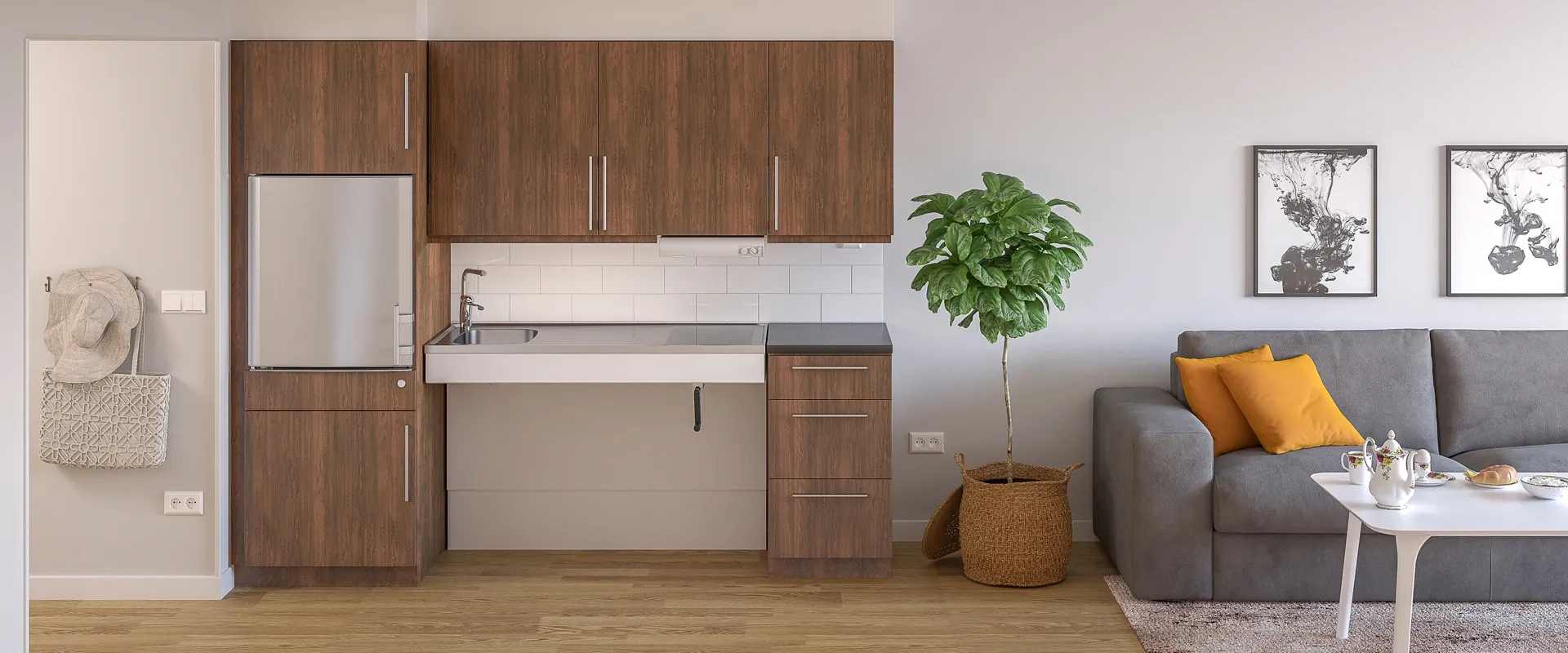
What Is a Manual Worktop Lift?
A manual worktop lift is a height-adjustable kitchen worktop that is raised and lowered by hand, providing a flexible and cost-effective alternative to electric systems.
Instead of using a motor, the worktop is adjusted using:
- A winding handle, or
- A manual lifting mechanism with gas assistance
These systems are commonly used in accessible kitchens in the UK, particularly where flexibility is needed, but frequent adjustment is not.
In practice, they align with accessible design principles under Part M of the Building Regulations → and BS 8300 →, while offering a simpler alternative to electric systems.
When Is a Manual Worktop Lift the Right Choice?
Manual systems are best suited to environments where the worktop height is set occasionally, rather than adjusted throughout the day.
In real-world use across UK homes and care environments, this often includes:
- Single-user households where the height rarely changes
- Structured environments such as nursing homes or hospitals
- Projects where budget is a key constraint
In these scenarios, manual systems provide flexibility without the cost or complexity of powered systems.
When Are Manual Worktop Lifts Less Suitable?
Manual systems are not always the right solution.
Because they require physical input to adjust, they can be less suitable where:
- Independent use is a priority
- Strength or mobility is limited
- Height needs to change regularly (e.g. shared kitchens)
In practice, the key limitation is independence.
If a user cannot adjust the worktop themselves, this can affect confidence and day-to-day usability.
This is particularly important in:
- Domestic environments where independence is the goal
- Rehabilitation settings where regaining autonomy is critical
What Types of Manual Worktop Lifts Are Available?
Manual worktop lifts generally fall into two main categories, based on how they are adjusted.
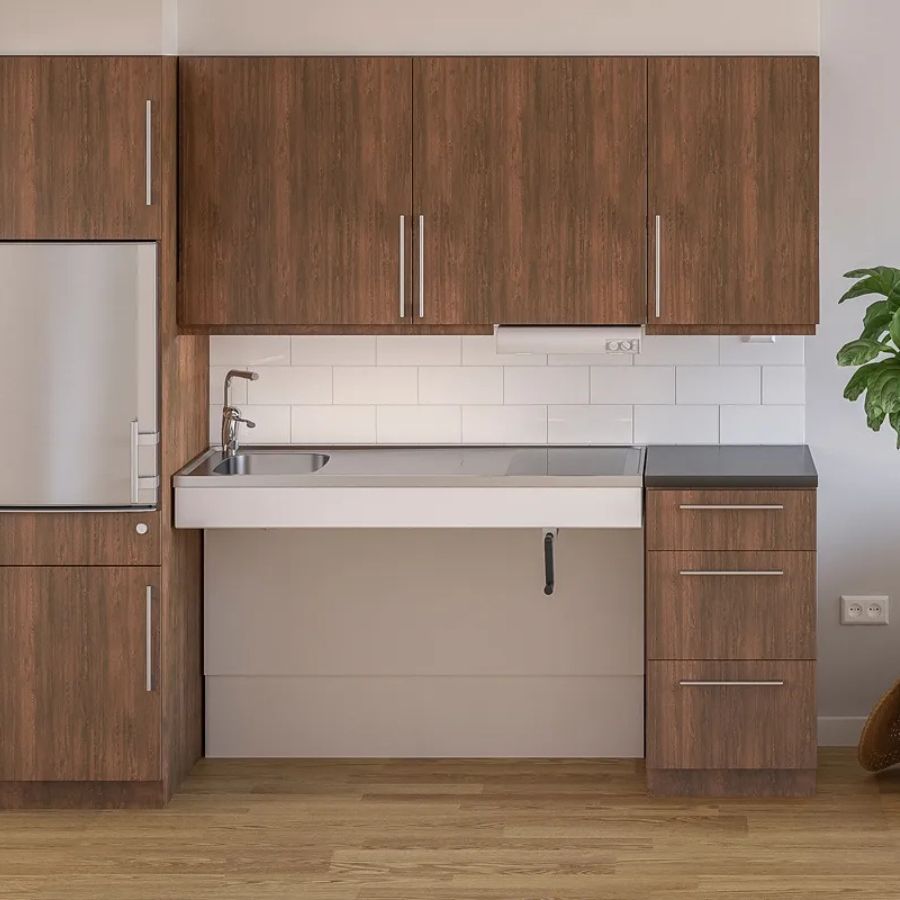
Crank Handle Systems (e.g. Granberg Manulift 6350)
Crank-operated systems use a winding handle to raise or lower the worktop.
The Granberg Manulift 6350 offers:
- Stepless height adjustment (typically ~300mm range)
- Handle positioning on left or right
- Fold-away handle for clear workspace
In practice, this allows precise height control, but requires good upper-body strength to operate.
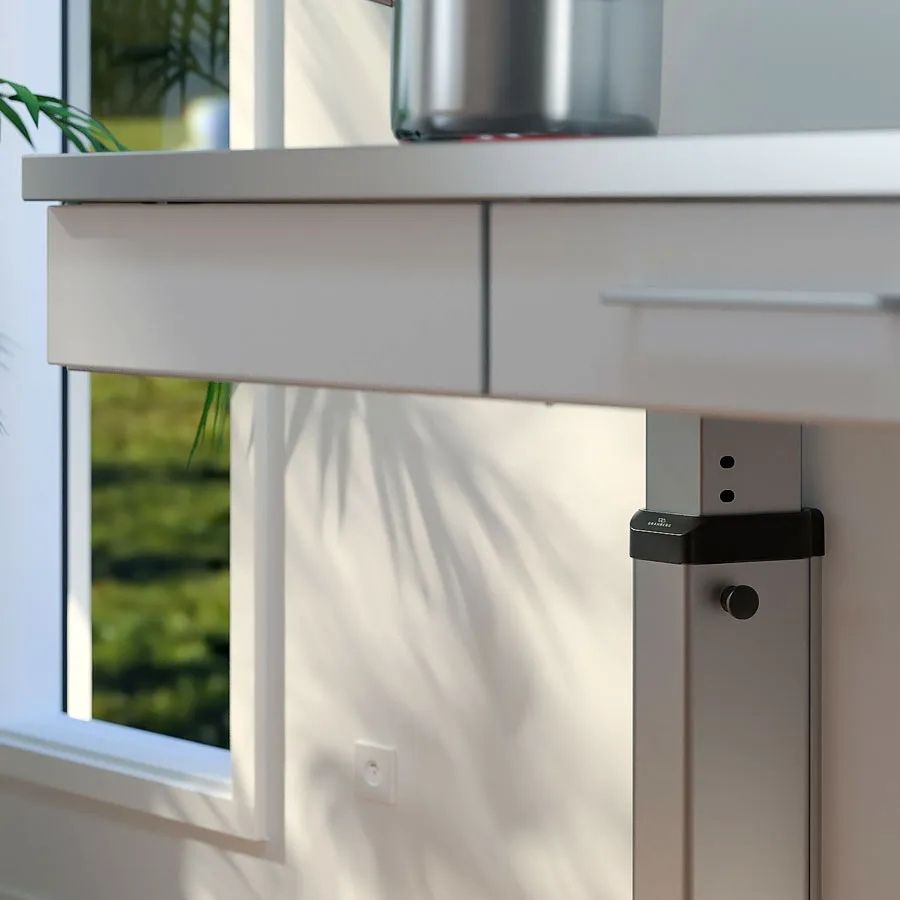
Peg and Gas-Assisted Systems (e.g. Granberg Manulift 6380)
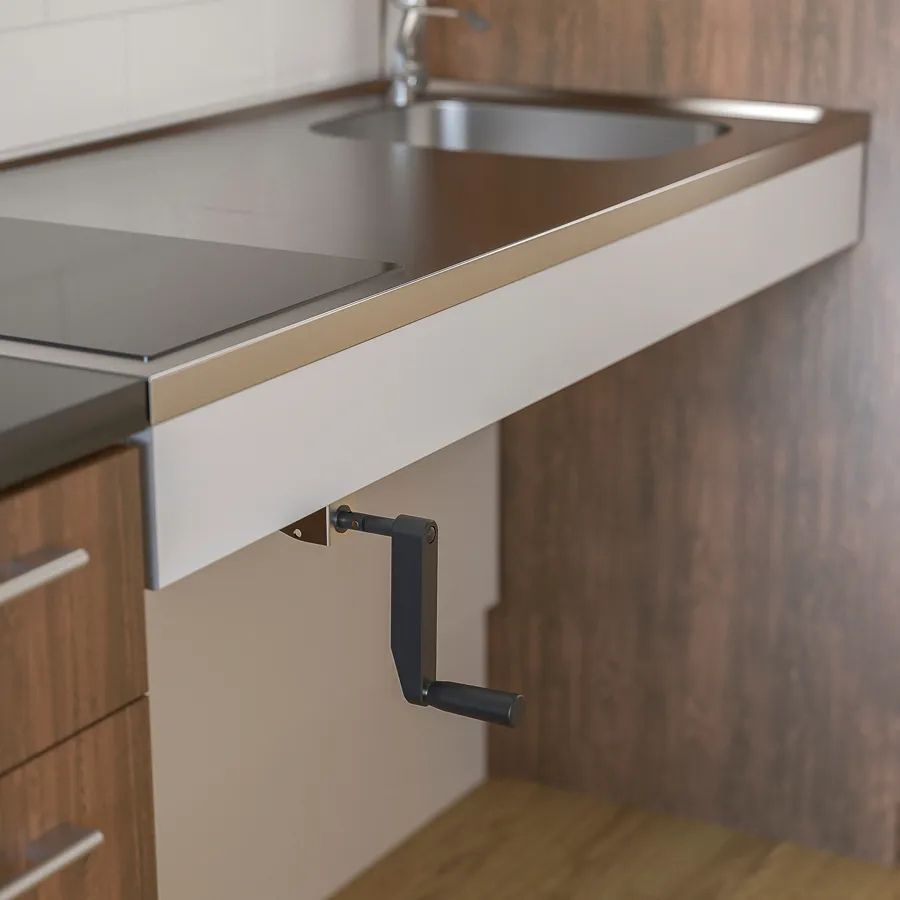
Peg-based systems use manual lifting supported by gas springs.
The Granberg Manulift 6380:
- Adjusts in fixed increments (typically 25mm steps)
- Requires two people to safely adjust
- Uses gas assistance to reduce lifting effort
In practice, this type of system is simpler but less flexible, and better suited to planned adjustments rather than frequent use.
What Is the Difference Between HA and LA Models?
Manual worktop lifts are available in different frame depths:
HA (≈103mm depth)
Suitable for sinks (including shallow bowl designs) and hobs
LA (≈40mm depth)
Suitable for worktops and hobs only
Choosing the correct depth is important, as it determines how the worktop can be used in a real kitchen.
What Are the Advantages of Manual Worktop Lifts?
Lower Cost
Manual systems are typically more affordable than electric alternatives, making them accessible for a wider range of UK projects.
Simple, Reliable Design
With fewer electrical components, manual systems offer a straightforward and durable solution.
Suitable for Occasional Adjustment
Where the height is set once and rarely changed, manual systems provide flexibility without unnecessary complexity.
What Are the Disadvantages?
Limited Independence
Manual systems often require assistance to adjust.
For many users, this is the defining factor. If the worktop cannot be adjusted independently, it can limit how freely the kitchen is used day-to-day.
Less Practical for Daily Use
In shared or dynamic kitchens, manual adjustment can quickly become inconvenient.
Installation Constraints
Most manual worktop lifts are wall-mounted, which means:
- The wall must be structurally suitable (e.g. masonry or reinforced stud wall)
- Additional support may be required in UK homes

Additional Practical Considerations
- Cover panels improve safety and appearance
- Hose guards protect pipework
- Help prevent interference with wheelchair footplates
- Reduce risk of accidental damage or leaks
These details often make a noticeable difference in everyday usability.
Manual vs Electric Worktop Lifts: Which Is Better?
A simple comparison:
- Manual worktop lifts → best for low-cost, occasional adjustment
- Electric worktop lifts → best for independence, frequent use, and shared kitchens
Expert insight:
In practice, manual systems are often chosen for cost reasons, but long-term usability should always be the priority when designing an accessible kitchen.
Should You Consider Future-Proofing?
One important factor often overlooked is how needs may change over time.
A manual system may work well today, but if:
- Mobility reduces
- Household needs change
- Independence becomes more important
…then upgrading to an electric system later may involve additional cost and disruption.
In UK homes, particularly new builds or long-term adaptations, this is an important consideration.
Can You Install Manual Worktop Lifts in an Existing UK Kitchen?
Yes — and this is common in the UK.
Manual systems can often be integrated into existing kitchens, provided the wall structure is suitable. This makes them a practical option for retrofit projects where budget and simplicity are key factors.
Explore Your Options
If you are considering a manual system:
Explore manual worktop lift solutions →
Or speak to our team to find the right solution for your kitchen.
FAQs
What is a worktop lift?
Have a read of our article answering exactly that
What is a manual worktop lift?
A manual worktop lift is a height adjustable kitchen surface that is raised and lowered by hand rather than using an electric motor.
Are manual worktop lifts suitable for wheelchair users?
They can be, but independent adjustment may be difficult. Electric systems are usually more suitable where independence is required.
What is the difference between crank and gas-assisted systems?
Crank systems use a winding handle for precise adjustment, while gas-assisted systems use supported manual lifting.
Can manual worktop lifts be installed in existing kitchens?
Yes, but they are typically wall-mounted, so structural support must be considered.
Are manual or electric worktop lifts better?
Electric systems are generally better for independence and frequent use, while manual systems are better for occasional adjustment and lower budgets.
Final Thought
A manual worktop lift can be a practical and cost-effective solution when used in the right environment.
The key is understanding not just what the system can do, but how it will be used every day. Where independence and flexibility matter, electric systems often provide a better long-term outcome.
Where adjustments are occasional and controlled, manual systems remain a reliable and effective choice.
Explore the difference.