


What Is a Manual Basin Lift?

Accessible Bathrooms
What Is a Manual Basin Lift?
A Practical Guide to Manual Rise & Fall Basins
Summary
A manual basin lift is a height-adjustable wash basin that is repositioned by hand, providing a cost-effective solution for occasional adjustment in accessible bathrooms.
For many users, it offers flexibility at a lower cost, but only when it matches how the bathroom is used day-to-day.
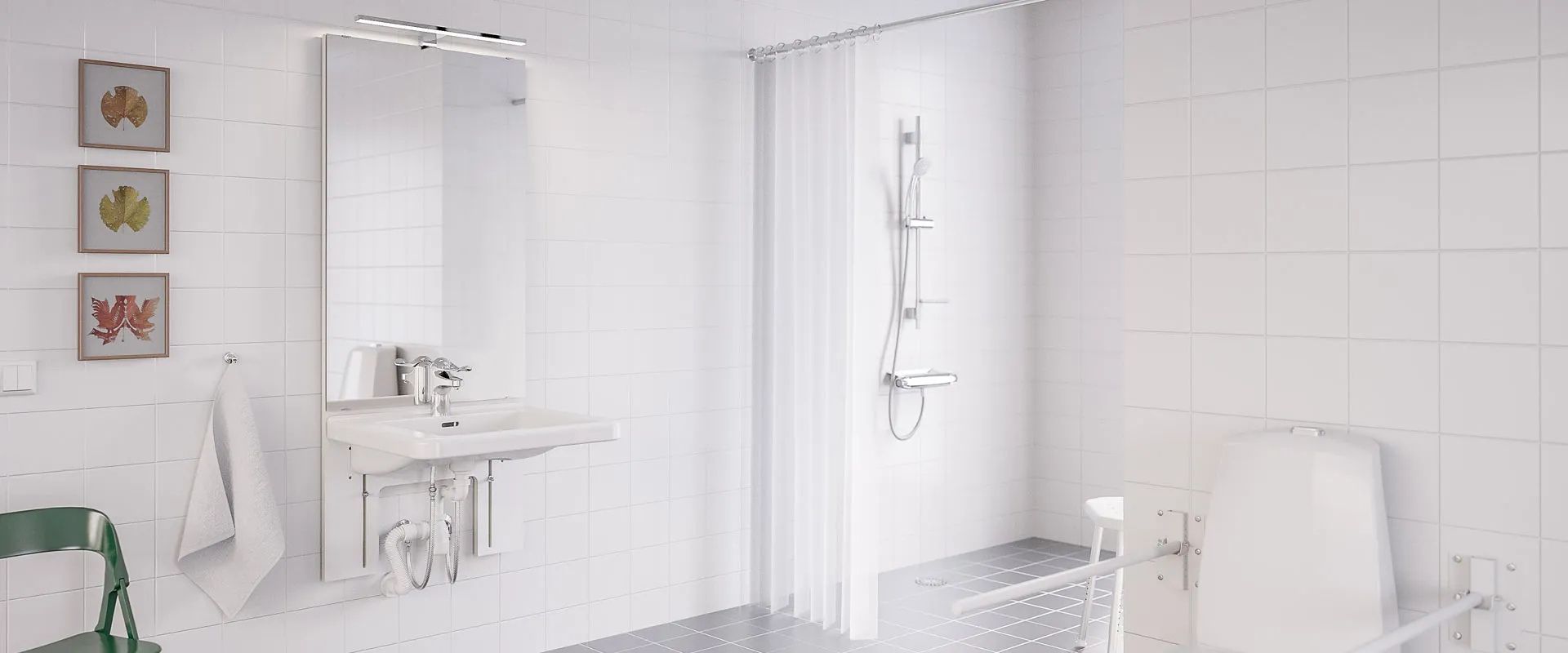
What Is a Manual Basin Lift?
A manual basin lift (also known as a rise-and-fall wash basin) allows the basin height to be adjusted without electricity.
Instead, it uses:
- mechanical fixings
- gas-assisted movement
- or manual controls
This makes it:
- simpler
- more cost-effective
- suitable for controlled environments
In the UK, manual basin lifts are commonly used in:
- care homes
- hospitals
- single-user homes
…where adjustment is needed occasionally rather than constantly.
Is a Manual Basin Lift Right for You?
Before looking at products, the key question is simple:
✔ A manual basin lift is a good choice if:
- height adjustment is occasional
- a carer or second person can assist if needed
- budget is a key consideration
- the user has consistent requirements
✖ It may not be suitable if:
- the user needs independent adjustment
- height changes are frequent
- ease of use is a priority
In these cases, an electric basin lift is usually the better long-term solution.
→ Explore manual basin lift options for cost-effective accessibility solutions
Why Choose a Manual Basin Lift?
Manual systems are often selected for their simplicity, but their real value depends on how the space is used.
They can:
- improve comfort for seated users
- reduce strain when washing
- support shared or adaptable spaces
However, the key limitation is usability over time.
In practice, manual systems are often chosen for cost; but long-term usability should always be the primary consideration.
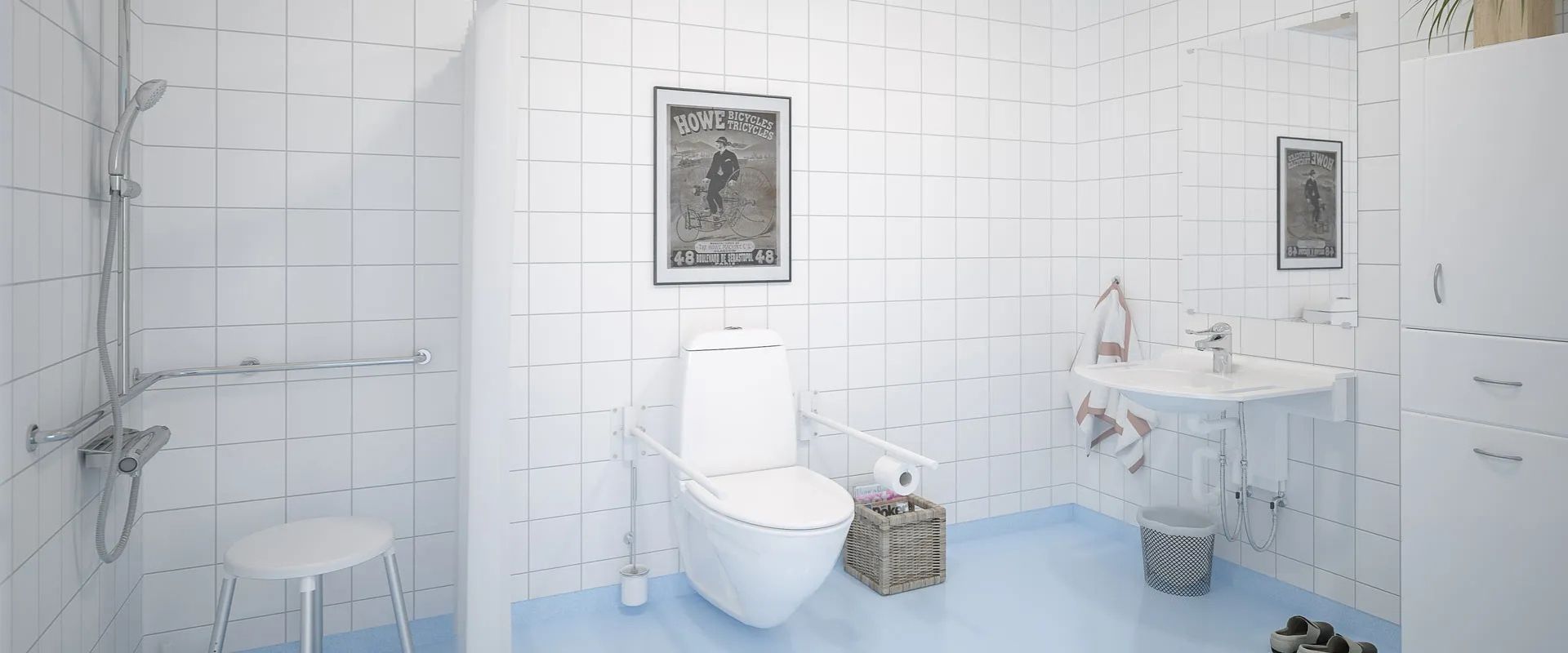
At a Glance: Manual Basin Lift Types
| Type | How It Adjusts | Best For |
|---|---|---|
| Tool-adjusted | Spanner/socket | Precise, fixed setups |
| Gas-assisted | Assisted push/pull | Easier occasional adjustment |
| Lever-operated | Manual lever | Quick repositioning |
| Lateral systems | Side-to-side movement | Positioning near WC |
| Specialist systems | Multi-directional | Clinical or salon use |
Understanding the Different System Types
Before comparing specific models, it helps to understand how each type feels to use.
Tool-Adjusted Systems
- Adjusted using a spanner or fixing points
- Very precise
- Best for set-and-forget positioning
Gas-Assisted Systems
- Use internal springs to reduce effort
- Easier to adjust
- Still usually require assistance
Lever-Operated Systems
- Adjusted using a handle or lever
- Faster to reposition
- More intuitive for carers
Lateral (Horizontal) Systems
These do not adjust height.
Instead, they:
- move the basin closer to the user
- improve positioning near a toilet
This makes them ideal for:
- assisted transfers
- complex layouts
Specialist Systems
Designed for specific environments such as:
- hairdressing salons
- clinical washing stations
These often combine:
- vertical movement
- lateral movement
- integrated fixtures
Product Examples by Category
Below are examples of how these systems are applied in real products.
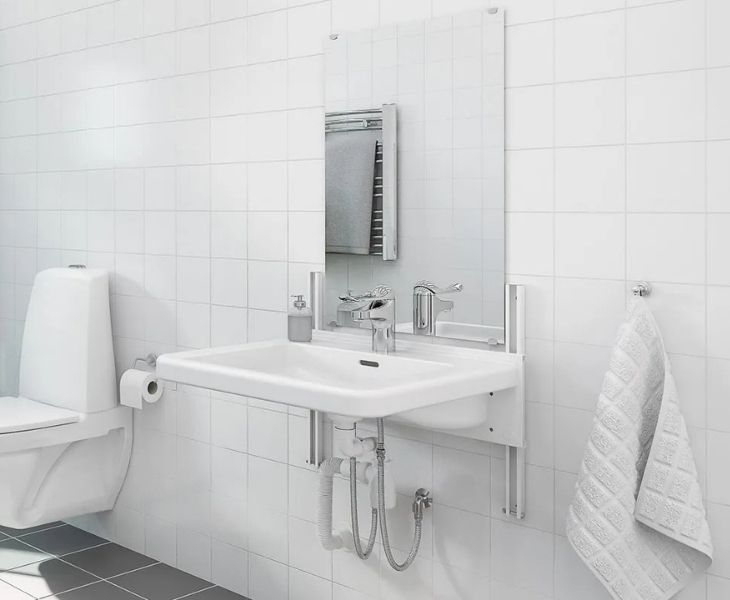
Basic Manual Systems
Granberg Basicline 403
- Simple, wall-mounted design
- No integrated mirror or lighting
- Stepless adjustment using tools
Best for:
- budget-conscious installations
- fixed-height setups with occasional adjustment
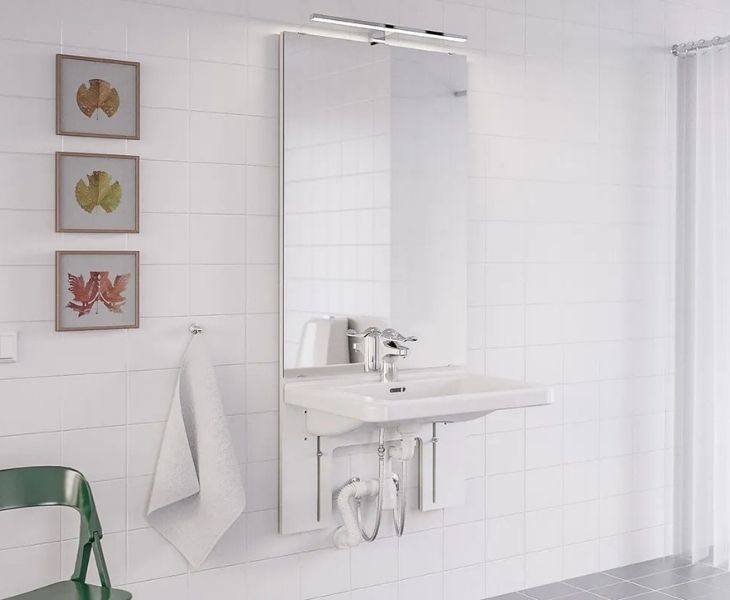
Integrated Manual Systems
Granberg Basicline 401
- Includes mirror and LED lighting
- Moves as a complete unit
- Set in fixed height increments
Best for:
- complete basin setups
- straightforward installations
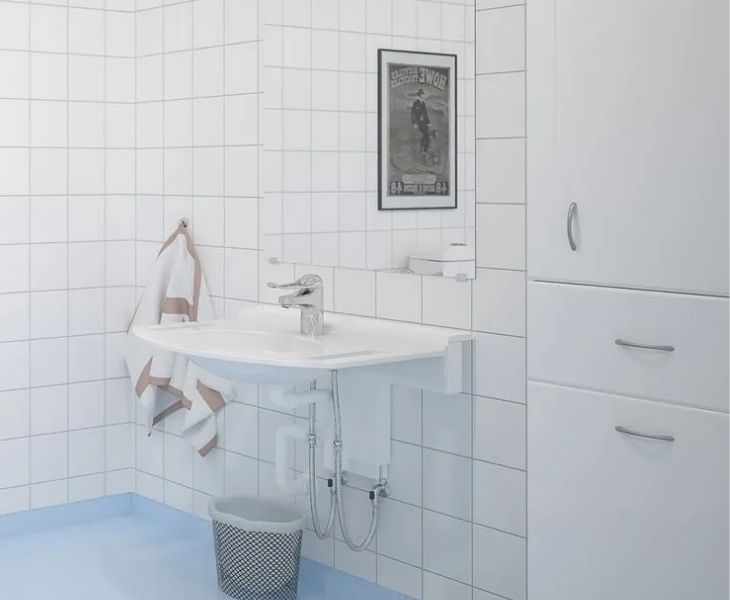
Gas-Assisted Systems
Granberg Basicline 406
- Tool-free adjustment
- Gas spring assistance
- Requires assisted downward movement
Best for:
- environments where easier adjustment is needed
- but not frequent repositioning
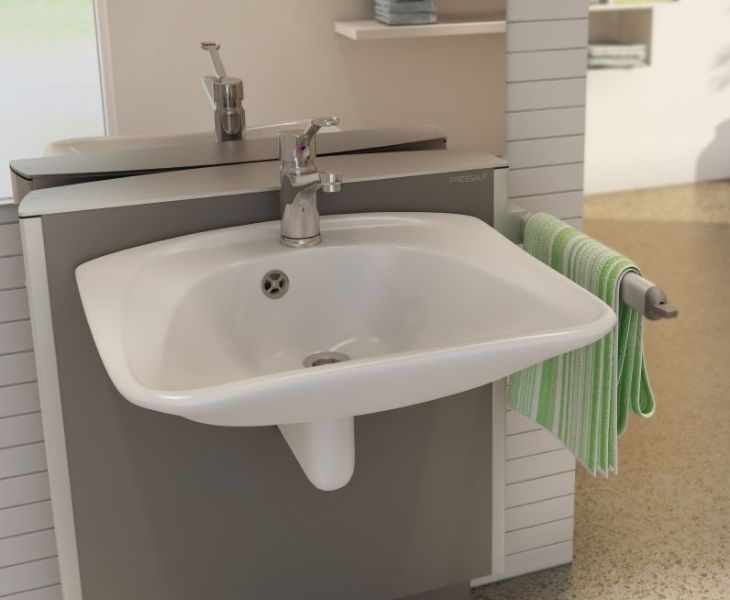
Lever-Operated Systems
Pressalit SELECT
- 300mm height adjustment
- lever-operated
- integrated pipe cover
Additional benefit:
lever doubles as support rail
Best for:
- assisted environments
- cleaner, more integrated designs
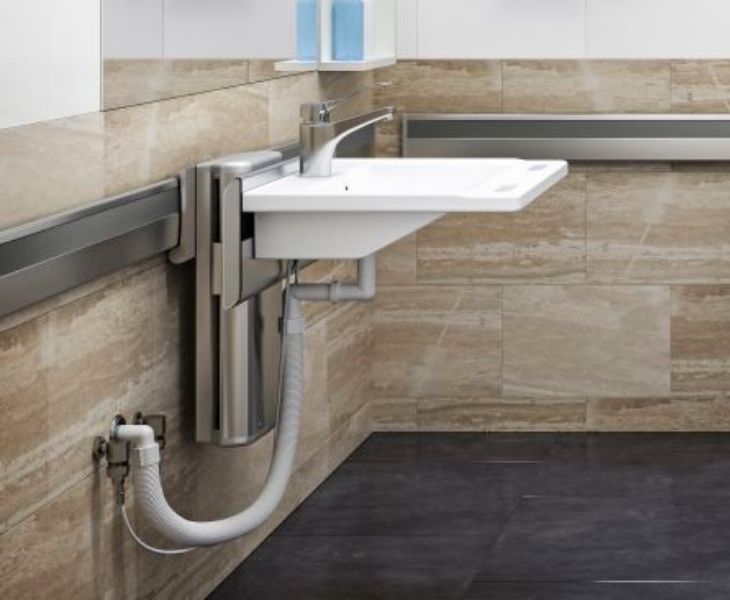
Adjustable Bracket Systems
Pressalit VALUE
- Available with or without gas assistance
- Compatible with MATRIX basins
Best for:
- flexible installations
- both domestic and clinical use
Positioning Systems (Not Height Adjustment)
Pressalit PLUS
- Moves basin horizontally
- improves positioning near WC
Important:
this is not a height-adjustment system
Best for:
- assisted layouts
- transfer-focused design
Specialist Systems
Armitage Shanks Salonex Kit
- Vertical + lateral adjustment
- integrated basin and tap system
Best for:
- hairdressing salons
- assisted washing environments
Manual vs Electric Basin Lifts
Manual basin lifts
- Lower cost
- Mechanically simple
- Best for occasional adjustment
- Often require assistance
Electric basin lifts
- Push-button operation
- Suitable for frequent use
- Supports independence
- Higher initial cost
Quick Summary
Manual basin lifts → best for occasional adjustment and lower cost
Electric basin lifts → best for independence and frequent use
How to Choose the Right Option
Focus on how the bathroom is used day to day.
Frequency of use
Occasional → manual
Frequent → electric
Independence
If the user needs to adjust the basin themselves, electric is usually required
Environment
Manual systems are well suited to:
- care environments
- supported living
- controlled-use spaces
Long-Term Usability
What works today should still work in 2–5 years.
Final Thought
A manual basin lift is a practical, cost-effective solution, but only when it matches the way the bathroom is used.
When chosen correctly, it can:
- improve comfort
- support accessibility
- provide flexible use
But if independence and ease of adjustment are priorities, an electric system is often the better investment.
Explore today.

Continue Learning
Want to understand the thinking behind these products? Explore our practical Accessibility School guides.
View all Accessibility School articles →