How long is the barrier expected to last?
A short recovery period may favour removable equipment, while an enduring need can justify integrated changes.
Accessible living specialists
Trading online since 2010

The most appropriate adaptation is not always the biggest one. During injury recovery or rehabilitation, the aim is often to remove the barrier now while leaving room for ability, routines and the property to change.
Choose the level of permanence around the expected duration of the need, how recovery may change, the amount of disruption involved and whether the solution will remain useful to the wider household. Portable, retrofit, adjustable and permanent adaptations can all be appropriate in different circumstances.
Start with the time horizon
An injury, operation or rehabilitation period can change mobility quickly. Some barriers need an immediate solution; others justify permanent building work only when the longer-term requirement is clearer.
A short recovery period may favour removable equipment, while an enduring need can justify integrated changes.
Adjustable products can continue to work as standing tolerance, reach or mobility improves.
Consider ownership, structure, finishes and whether a change can be reversed without major remedial work.
A temporary solution should not create a new barrier for partners, family members or carers.
Think in levels, not two boxes
Many useful adaptations sit between a loose piece of equipment and a full room rebuild. The aim is to use the least disruptive solution that genuinely removes the barrier while keeping future options open.
Examples
A shower seat can provide a stable seated option during reduced standing tolerance. A portable or relocatable ramp can solve a level change without committing to a permanent external structure. A height-adjustable worktop can support seated use now and standing use later.
By contrast, a level-access shower, widened doorway or major kitchen reconfiguration may be appropriate where the need is long-term and the property can support the work.
Before you commit
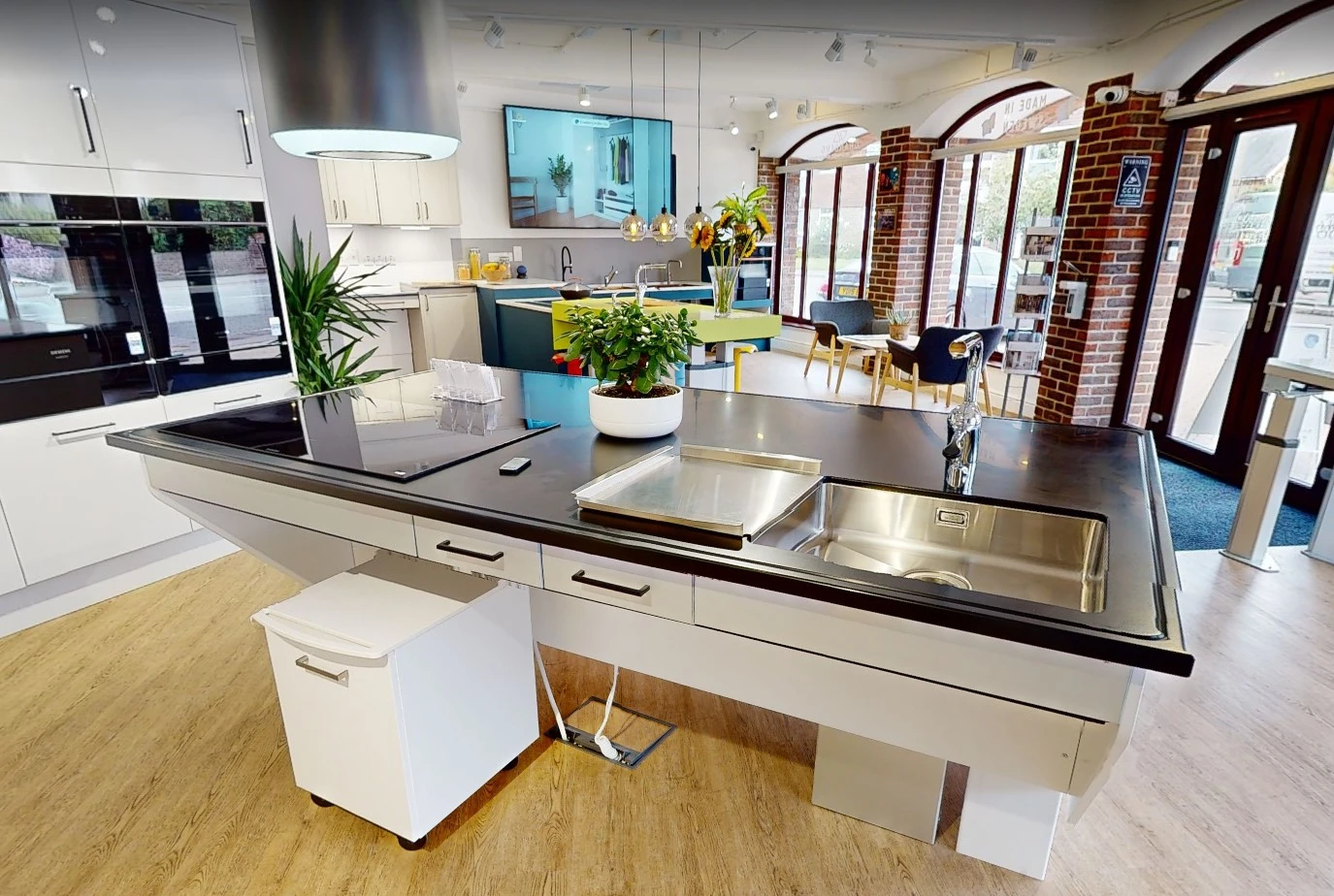
See what remains useful later
Operate worktop lifts, islands, bathroom systems and other adjustable products in the showroom to understand whether a solution can support both the current stage of recovery and later use.
FAQs
A temporary adaptation is one intended to solve a short-term or changing need with limited permanent alteration. Examples can include portable ramps, removable seating or equipment that can be taken away later.
Not automatically. Even where a need is long-term, an adjustable or retrofit solution may be more flexible, easier to maintain or better for a shared household.
Yes. Adjustable products can support seated use, reduced standing tolerance or limited reach and can often remain useful as ability changes.
Not if an immediate barrier is making essential daily tasks unsafe or impossible. The aim is to choose a proportionate solution now while avoiding unnecessary irreversible work where the longer-term requirement is still unclear.
Occupational therapists commonly assess everyday activities and the home environment and may recommend equipment or adaptations based on individual needs.
Yes. Independent 4 Life’s showroom includes working adjustable kitchens, bathrooms, toilets, storage and other specialist systems.
Plan around real life
If recovery is still changing, tell us the current barrier, the room and how long you expect the issue to last. We can help you compare retrofit, adjustable and more permanent product routes.