

What is an Accessible Kitchen Sink?
Accessible Kitchens
What Is an Accessible Kitchen Sink?
A UK Guide
Summary
An accessible kitchen sink should be shallow enough to allow users to work comfortably without excessive reaching, while also providing sufficient knee space underneath when required. Combined with the right tap, worktop, and layout, it helps create a kitchen that is safer, more comfortable, and easier to use independently.
What makes a kitchen sink accessible?
An accessible kitchen sink is designed to be comfortable, safe, and practical for a wide range of users, particularly wheelchair users and people with reduced mobility.
Unlike a standard kitchen sink, an accessible sink considers:
- bowl depth
- knee clearance
- reach
- tap positioning
- worktop integration
- ease of use
Perhaps the single most important feature is something many people never think about: the depth of the sink bowl.
Why the Kitchen Sink Matters
The sink is one of the hardest-working areas in any kitchen.
It's used for:
- washing food
- preparing meals
- filling pans
- washing dishes
- cleaning
Unlike an oven or cupboard that might only be used occasionally, the sink is used multiple times every day.
If it isn't comfortable to use, the entire kitchen becomes more difficult.
Accessibility Is About More Than Lowering the Sink
Many people assume an accessible sink is simply installed lower.
In reality, accessibility depends on several factors working together.
These include:
- sink depth
- worktop height
- tap position
- clear space underneath
- surrounding layout
The goal is to allow someone to use the sink comfortably, whether standing or seated.
The Most Important Feature: A Shallow Bowl
Direct Answer
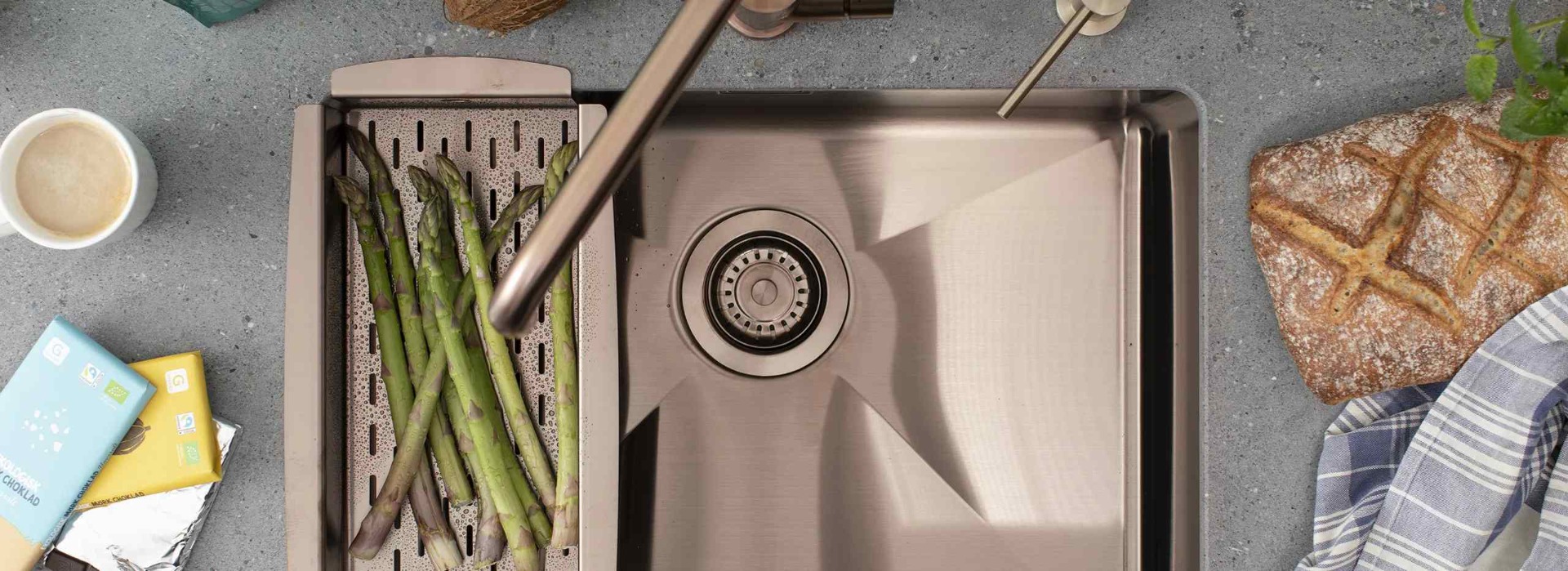
One of the defining features of an accessible kitchen sink is a shallow bowl.
This is because a deep sink requires the user to:
- lean further forward
- reach further down
- bend more at the back, shoulders, and arms
For many people, particularly wheelchair users, this quickly becomes uncomfortable.
Why Does Bowl Depth Matter?
Imagine trying to reach the bottom of a deep sink while sitting down.
You must reach over:
- the worktop
- the sink edge
- the bowl itself
Every extra centimetre of depth pushes the base of the sink further away.
A shallow bowl reduces this reach.
This means users can:
- wash dishes more comfortably
- prepare food with less effort
- maintain a better posture
- reduce strain on the shoulders and back
It may seem like a small detail, but it makes a significant difference in everyday use.
Shallow Doesn't Mean Less Practical
Some people worry that a shallow sink won't be large enough.
In practice, modern accessible sinks are carefully designed to balance:
- usable capacity
- accessibility
- ergonomics
The result is a sink that remains practical for everyday kitchen tasks while being much easier to use.
→ Explore accessible kitchen sinks
Knee Space: Essential for Seated Users
Direct Answer
An accessible sink should often provide clear space underneath, allowing a wheelchair user to move closer to the work surface.
Without knee clearance, the user must remain further away.
This increases the amount of reaching required.
With clear space beneath the sink:
- posture improves
- reach is reduced
- comfort increases
- independence is enhanced
This is one of the reasons accessible sinks are frequently paired with:
- height-adjustable worktops
- wall-mounted plumbing
- compact waste systems
Tap Position Matters Too
A well-designed sink also includes an accessible tap.
Ideally, controls should be:
- easy to reach
- simple to operate
- positioned without excessive stretching
Many accessible kitchens use:
- single-lever mixer taps
- extended controls
- ergonomic designs
These reduce effort while improving control.
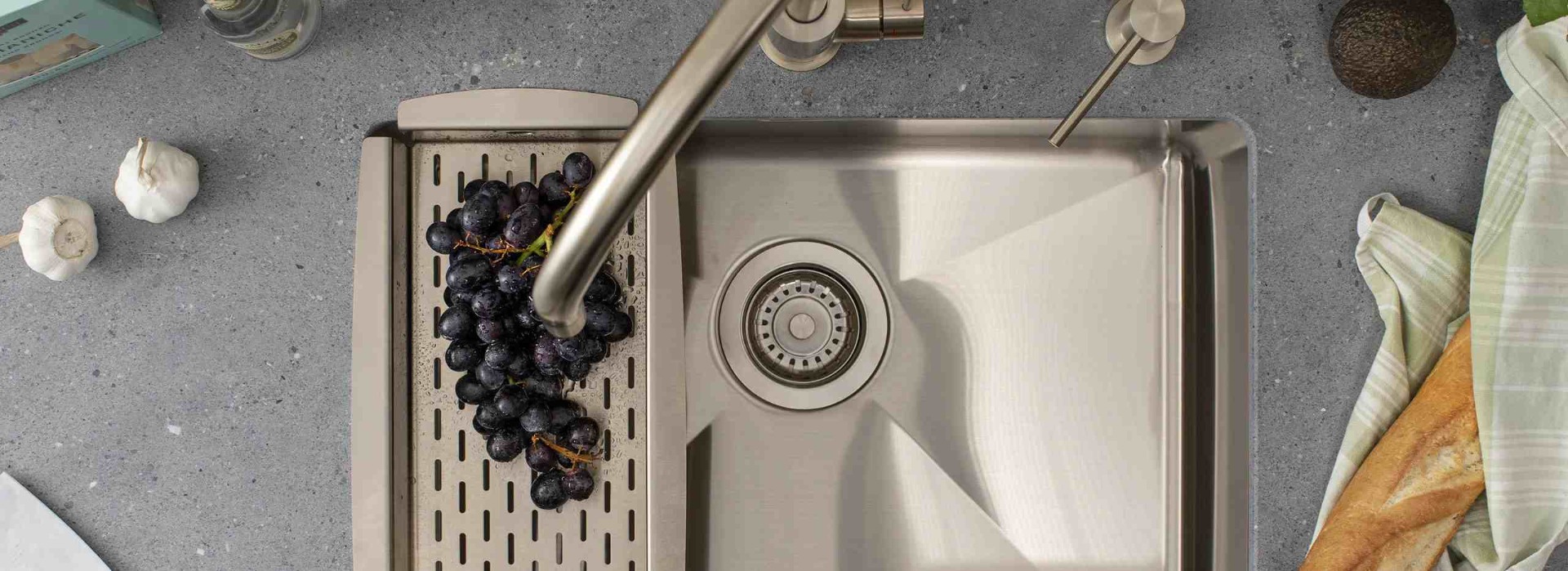
Why Sink Position Is Just as Important
A high-quality accessible sink can still perform poorly if it's installed incorrectly.
Good design considers:
- distance from the worktop edge
- relationship to surrounding preparation space
- position within the kitchen workflow
This allows users to move naturally between:
- preparation
- washing
- cooking
→ Read about accessible kitchen design
A Note on Waterfall Worktops
Modern waterfall worktops have become increasingly popular in contemporary kitchens.
They create a striking visual effect by extending the worktop material vertically down to the floor.
However, they can affect accessibility.
Because the side panel reaches the floor, it can reduce or completely remove the knee space needed for seated users to approach the sink comfortably.
This doesn't mean waterfall worktops can never be used in an accessible kitchen.
However, they should be carefully considered during the design stage to ensure they don't compromise usability.
Good design balances appearance with practicality.
What Are the Different Types of Accessible Kitchen Sinks?
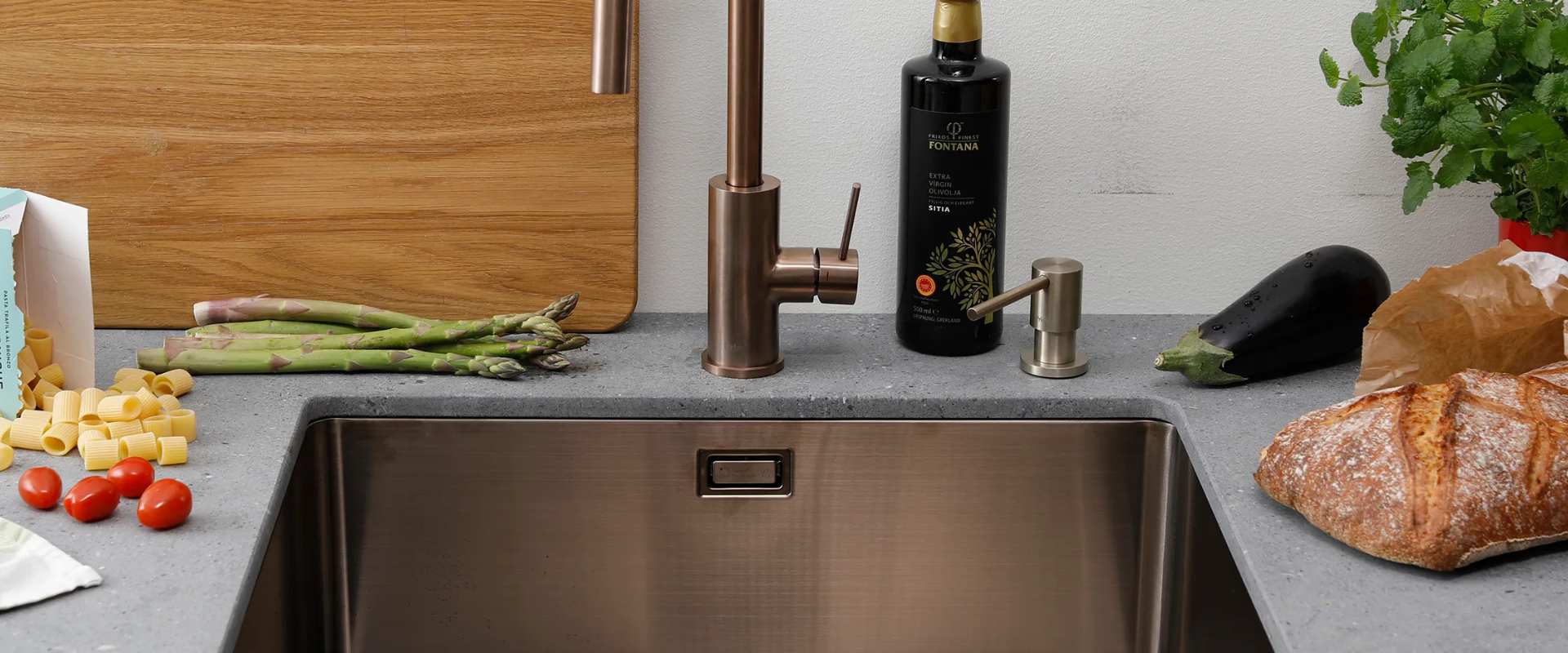
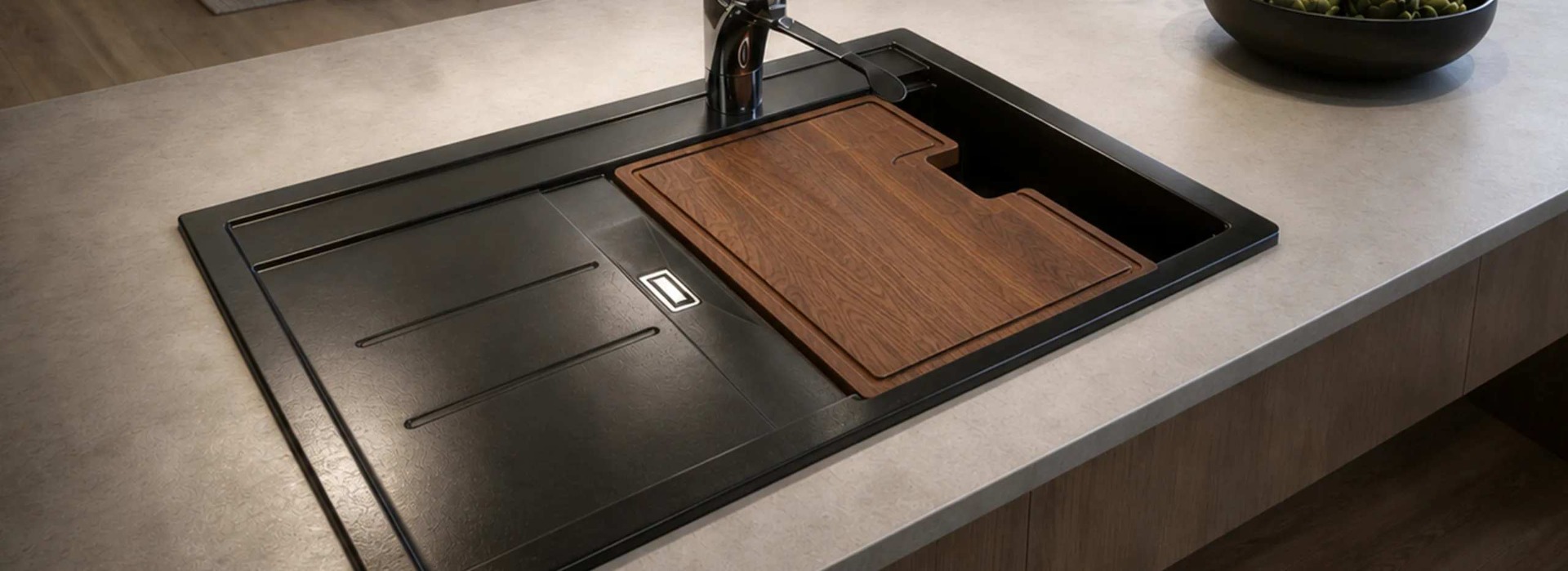
All of the sinks in our range offer the market-leading shallow bowl depth of only 120mm, and can be integrated into worktop lifts.

Granite Sinks
Granite sinks blend timeless design with practical functionality, designed for accessible, ergonomic kitchen solutions. Made from durable quartz composite, these sinks resist heat, impact, and daily wear, making them a reliable option. Their non-porous, hygienic surfaces are easy to clean, which is ideal for kitchens where function and accessibility are important, and they are available in a range of colours.
- stylish
- durable
- easy to clean

Trendline Sinks
The Trendline series offers a modern and high-quality sink solution designed for accessible kitchens. They are famously stylish, available in a range of contemporary PVD colours and configurations. They feature a durable, colour-fast finish that ensures a consistent and premium look.
- stylish
- contemporary
- PVD

Inset and Under-mount Sinks
Inset and undermount sinks are designed for practicality, to open up the workspace and enhance posture. They tend to be a less expensive option, and are only available in stainless steel.
Materials: Granite or Stainless Steel?
Accessible sinks are available in a range of materials.
Two of the most popular are:
Stainless Steel
Benefits include:
- durable
- hygienic
- easy to clean
- timeless appearance
Granite Composite
Benefits include:
- premium appearance
- scratch resistance
- excellent durability
- wide range of colours
The choice is usually aesthetic.
Accessibility depends far more on the sink's design than the material itself.
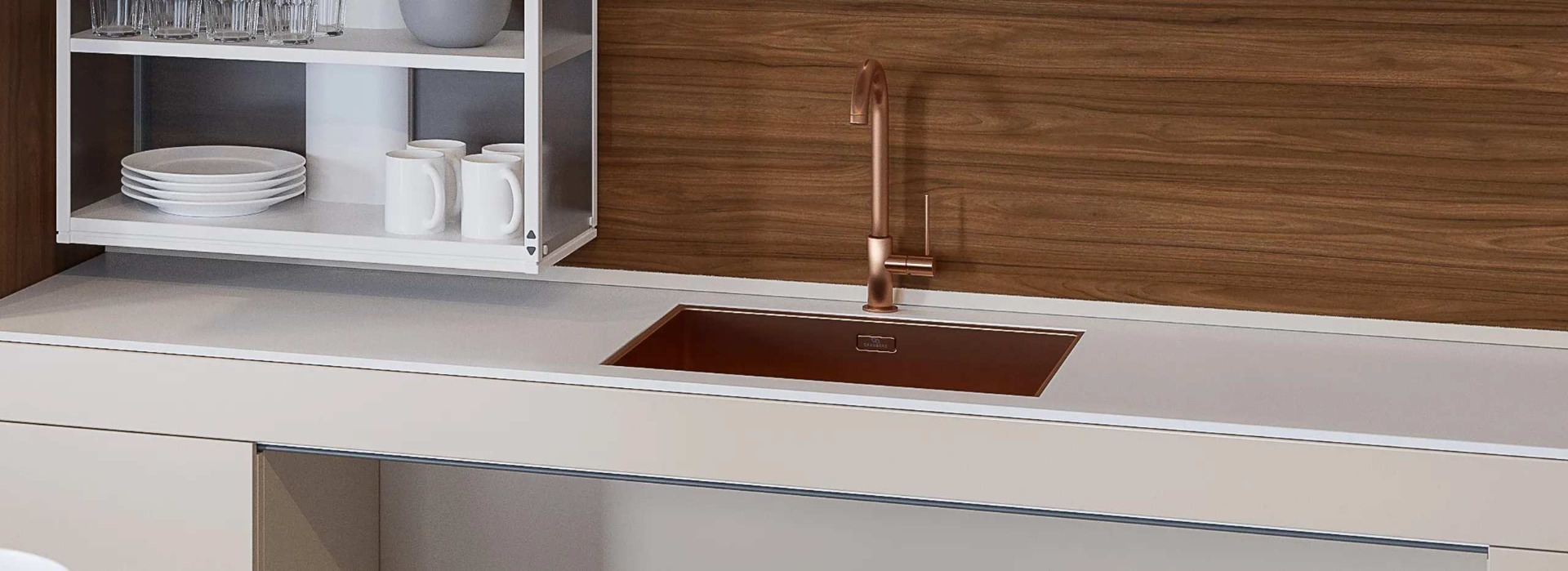
Accessible Sinks and Height-Adjustable Worktops
Direct Answer
An accessible sink becomes even more effective when integrated into a height-adjustable worktop.
This allows the entire working area to move together.
The result is:
- better ergonomics
- improved flexibility
- easier use for multiple people
Rather than adapting to a fixed sink height,
the sink adapts to the user.
Real-World Example
Two kitchens have identical layouts.
Kitchen A
Standard sink with:
- deep bowl
- fixed worktop
- no knee space
Kitchen B
Accessible sink with:
- shallow bowl
- clear knee space
- ergonomic tap
- height-adjustable worktop
Result
Kitchen B allows users to:
- work closer to the sink
- reach more comfortably
- reduce fatigue
- use the kitchen more independently
The difference isn't immediately obvious, but it's felt every time the sink is used.
Common Misconceptions About Accessible Kitchen Sinks
"A deeper sink is always better."
Not necessarily.
For many users, a shallower bowl is significantly more comfortable.
"Lowering the sink makes it accessible."
Height is only one part of the design.
Bowl depth, knee space, and layout are equally important.
"Accessible sinks look clinical."
Modern accessible sinks are available in contemporary stainless steel and granite finishes that integrate beautifully into stylish kitchens.
"Any sink will work with a wheelchair."
Without appropriate bowl depth and clear space underneath, many standard sinks remain difficult to use.
Frequently Asked Questions (FAQ)
What is an accessible kitchen sink?
A sink designed to improve comfort, reach, and usability for a wider range of users.
Why are shallow bowl sinks better?
They reduce reaching, improve posture, and make the sink easier to use, particularly for wheelchair users and those with reduced mobility.
Do accessible sinks need knee space?
For many seated users, yes. Clear space beneath the sink allows closer access and greater comfort.
Can accessible sinks look modern?
Absolutely. Today's accessible sinks are available in contemporary stainless steel and granite designs.
Can an accessible sink be fitted into a height-adjustable worktop?
Yes. This is one of the most effective ways to create a flexible and ergonomic kitchen.
Final Thoughts: Small Detail, Big Difference
When people think about accessible kitchens, they often focus on worktops or appliances.
Yet the sink is one of the most important features to get right.
A carefully designed accessible sink, particularly one with a shallow bowl, can dramatically improve comfort, reduce physical strain, and make everyday kitchen tasks easier.
Combined with thoughtful layout, accessible taps, and height-adjustable worktops, it helps create a kitchen that works for everyone.
Your Next Step
If you're designing an accessible kitchen, don't overlook the importance of the sink. The right choice can make a noticeable difference to comfort and independence every single day.
→ Explore our accessible kitchen sinks → Explore accessible kitchen solutions → Speak to our team for tailored advice for your project
The best accessible kitchen sinks don't just hold water; they help people use their kitchens with greater comfort, confidence, and independence.

Continue Learning
Want to understand the thinking behind these products? Explore our practical Accessibility School guides.
- What is WRAS Compliance? →
- What Is an Adapted Kitchen? →
- Accessibility & Inclusion in the Workplace →