Twisting
Round knobs, multi-turn taps and stiff controls can demand grip and wrist rotation.
Accessible living specialists
Trading online since 2010

Reduced grip strength, coordination or fine motor control can make small everyday actions unexpectedly difficult. A good adaptation starts with the tasks causing the most effort, then changes the control, reach or routine without unnecessarily redesigning the whole home.
Start with the actions that require pinching, twisting, sustained grip or precise finger movement. Then look for ways to increase the contact area, reduce operating force, shorten the movement, bring the control within easier reach or automate the task. Often, a few targeted changes to taps, handles, rails and hygiene controls can make a bigger difference than a complete room rebuild.
Start with the barrier, not the catalogue
Reduced dexterity affects people differently. Instead of assuming a particular product is needed, identify the action and what makes it hard.
Round knobs, multi-turn taps and stiff controls can demand grip and wrist rotation.
Small catches, buttons and handles may rely on finger-and-thumb precision.
Heavy doors, drawers and mechanisms can be difficult where hand strength is reduced.
Small or stiff buttons can be awkward even when they look simple.
A task may be manageable briefly but tiring if the grip has to be maintained.
Dexterity problems become harder when the control is also distant, high, low or behind an obstruction.
Kitchen
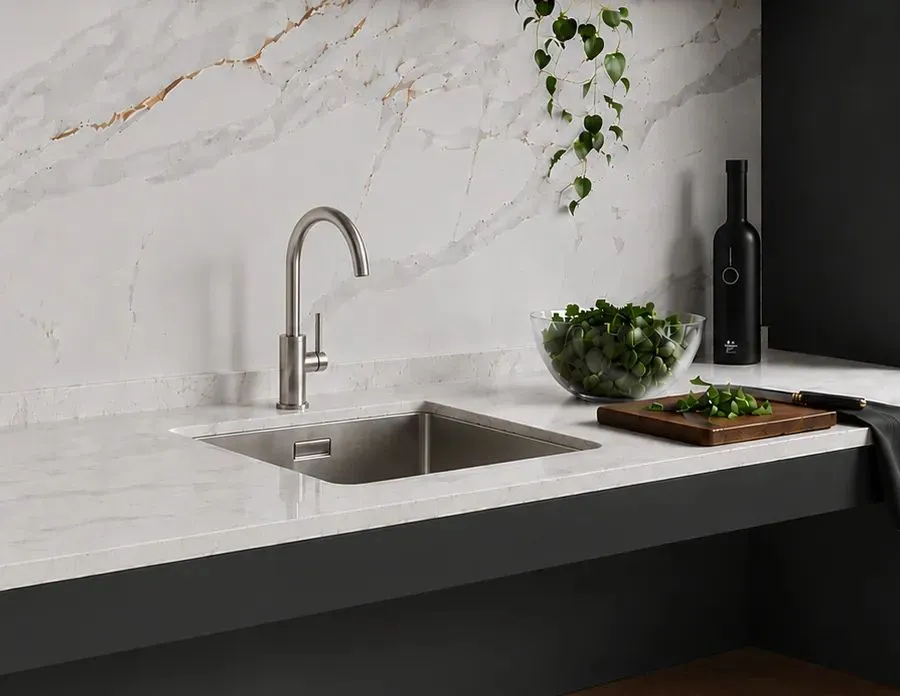
Extended single-lever controls can be operated with a larger part of the hand, wrist or forearm and reduce the need for a precise fingertip grip.
Explore kitchen taps →Pull-down, pull-out and height-adjustable storage can reduce the need to grip objects while stretching overhead or reaching deep into cupboards.
Larger handles, easy-running mechanisms and sensible pull positions can reduce pinch grip and effort.
Worktop-level power, USB and wireless charging can reduce repeated bending and fiddling with plugs in difficult locations.
Explore concealed power & charging →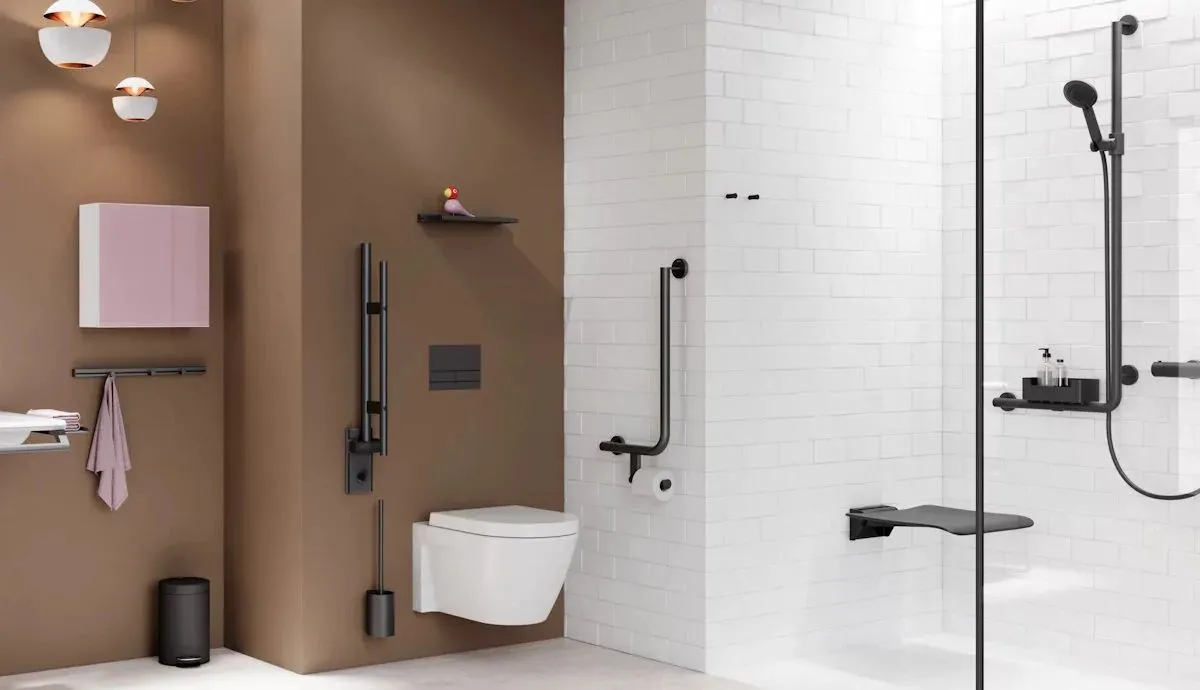
Bathroom
In bathrooms, reduced grip can combine with water, fatigue and balance demands. Long-lever or sequential controls can reduce twisting; well-positioned rails can provide a stable handhold; and shower toilets or automated functions can reduce manual hygiene tasks.
Do not focus on one product in isolation. The control still needs to be within reach from the actual seated or standing position.
Choose a different way to operate the task
More contact area and less reliance on fingertip grip.
Shorter movement than a conventional multi-turn control.
Removes physical activation where touchless operation suits the user and environment.
Useful where pressing is easier than gripping or turning, provided the required force remains manageable.
Can bring operation into a comfortable reach zone rather than forcing the user to reach the product itself.
Can remove a repeated manual task, such as washing and drying functions on a shower toilet.
Shape, texture and diameter can change how securely a rail can be held when hand strength is limited.
Moving the work surface or fixture can sometimes be easier than repeatedly reaching beyond a comfortable zone.
Adapt at your own pace
If one tap, handle or control is creating most of the difficulty, a focused retrofit can be a sensible first step. Larger projects become useful when the problem is spread across reach, layout, storage, worktop height and several daily tasks at once.
Room-by-room checklist
Try controls by feel
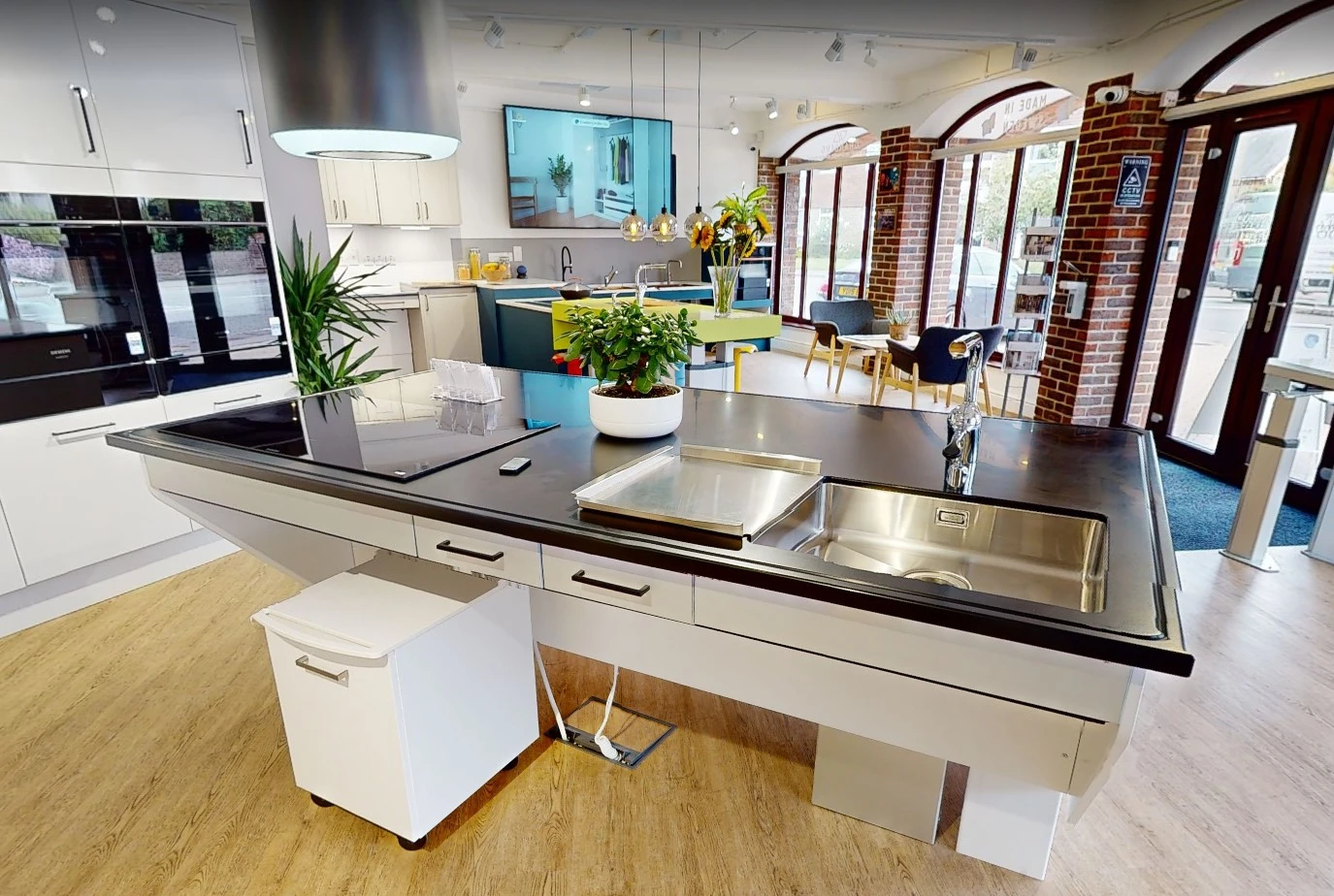
Compare lever lengths, button operation, lift controls, rail shapes and other product details in the Petersfield showroom. A guided video call or virtual tour can also help you narrow down options before travelling.
FAQs
Long-lever, single-lever or quarter-turn controls can reduce grip and twisting for many people. Sensor taps can remove physical activation altogether. The best option depends on the user’s reach, strength and preferred movement.
No. Many easier-to-use taps, controls, rails and storage systems are available in contemporary finishes and can be integrated into a normal domestic design.
Often, yes. Taps, rails, handles, some controls and certain hygiene products can be replaced or added without rebuilding the whole room. Larger adaptations may be needed where layout and reach are also barriers.
It can reduce the manual cleaning involved in toileting by providing washing and, on some models, drying functions. Control type and positioning still need to suit the user.
Not always. Size helps, but operating force, position, feedback and the movement required are just as important.
An occupational therapist can assess how specific tasks are being performed and what barriers are involved. Product specialists can then help explain the different ways products operate and what is available.
Start with one difficult task
You do not need to know the product name. Tell us whether the problem is grip, twisting, pressing, reach or another everyday action and our team can help you identify relevant product types and information.