


Are Half-Height Shower Doors a Good Choice?
Accessible Bathrooms
Are Half-Height Shower Doors a Good Choice?
A Practical UK Guide
Summary
Half-height shower doors are a practical solution for accessible bathrooms, particularly where assisted showering, easier access, and a more open layout are important. They improve usability and flexibility, but water management depends more on floor design and drainage than the door itself.
What Are Half-Height Shower Doors?
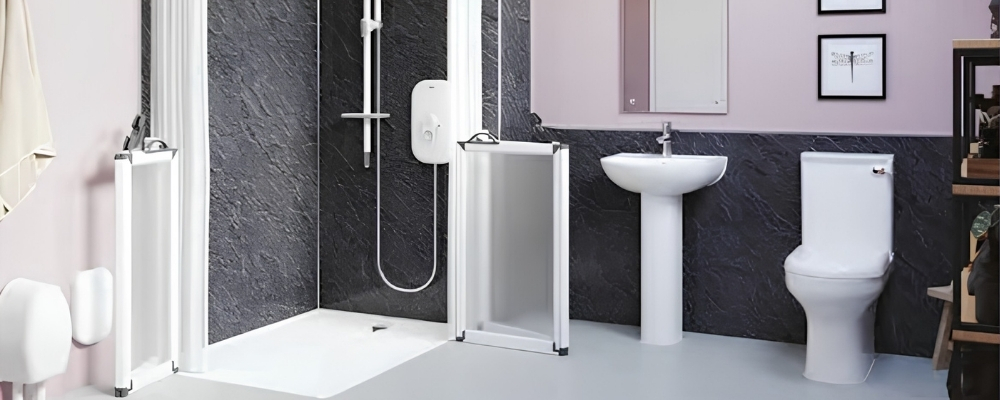
Half-height shower doors are partial-height enclosures designed to improve access, flexibility, and usability in accessible bathrooms and wetrooms.
Unlike full-height enclosures, they do not fully enclose the shower area. Instead, they provide a barrier while keeping the space open and easy to access.
In the UK, they are commonly used in accessible bathroom design, particularly alongside level access showers, in line with guidance such as Part M of the Building Regulations and BS 8300.
Why Choose Half-Height Shower Doors?
The main reason to choose half-height doors is not style — it is usability.
In many UK bathrooms, full-height enclosures can restrict access, make assisted use more difficult, and create barriers for users with reduced mobility. Half-height doors remove those barriers, allowing the space to work more naturally for both independent and assisted use.
What Are the Benefits of Half-Height Shower Doors?
Improved Accessibility
Half-height doors allow easier entry and exit compared to full enclosures.
With wide-opening hinges, they can create a clear access point, which is particularly useful for individuals with limited mobility or where a more open approach is needed.
Better for Assisted Showering
This is where half-height doors offer their biggest advantage.
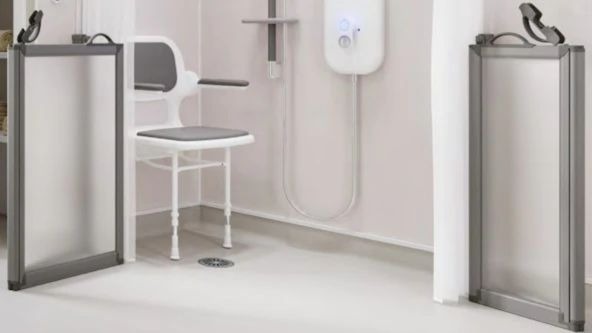
Because the enclosure is not full height, carers or family members can assist from outside the shower area without obstruction. This improves positioning, reduces awkward movement, and allows support to be given more safely.
In practice:
A user may sit on a shower seat while a carer assists from outside the enclosure, without needing to step into the wet area or work around a full-height screen.
This setup supports both safety and dignity.
Increased Safety
Half-height doors improve safety by making access easier and allowing quicker support if needed.
However, it is important to understand that water control is influenced more by floor design than the door itself. In well-designed wetrooms, with proper falls to waste and drainage, water is effectively managed regardless of door height.
This distinction is important in UK bathrooms, where layout and drainage play a critical role.
More Open, Spacious Feel
Visually, half-height doors create a more open environment.
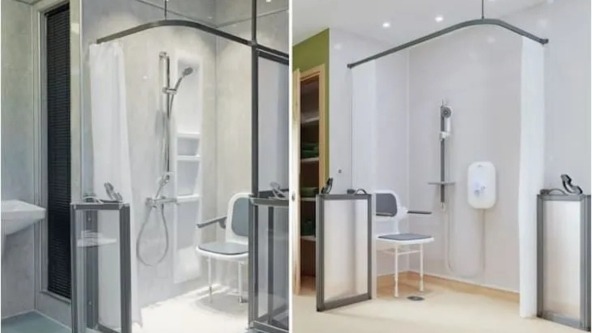
They allow light to pass through the space and avoid the enclosed feeling of full-height cubicles, which can be particularly beneficial in smaller bathrooms.
Easier Cleaning and Maintenance
With less surface area than full-height enclosures, these doors are quicker and easier to clean.
They are also easier to reach, which reduces effort and makes ongoing maintenance more manageable.
Cost-Effective Option
Half-height doors are often more cost-effective than full enclosures.
They require less material and are typically simpler to install, making them a practical option for many UK bathroom projects.
Explore half-height shower door options designed for accessible bathrooms →
What Are the Disadvantages?
Potential for Water Escape
Because the enclosure is not full height, some water may escape the immediate shower area.
In practice, this is usually managed through:
- Correct floor gradients (falls to waste)
- Appropriate drainage design
- Shower positioning
Expert insight:
In most UK accessible bathrooms, water control is determined far more by layout and drainage than by the height of the door itself.
Installation Still Matters
Correct installation is essential.
Even though these systems are simpler than full enclosures, poor fitting can lead to leaks, instability, or reduced performance. Professional installation is often recommended to ensure proper sealing and alignment.
Privacy Considerations
Privacy can be more limited compared to full-height enclosures, particularly in shared households.
This is often overlooked but can be important in:
- Multigenerational homes
- Assisted environments
- Shared bathrooms
Material choice and layout can help manage this, but it should be considered early in the design.
Glass vs PET: Which Material Should You Choose?
Glass Shower Doors
Glass offers a clean, modern appearance and works well in design-led bathrooms.
It allows light to flow through the space and can be customised with frosted or textured finishes to improve privacy.
However, in accessible environments, practical considerations are important:
- Can show water marks more easily
- Requires regular cleaning
- More vulnerable to impact
- Longer lead times in the UK
PET Shower Doors
PET doors are designed for durability and practicality.
They are resistant to impact, scratches, and daily wear, making them particularly suitable for high-use or assisted environments.
They also:
- Require less maintenance
- Are quicker to supply
- Offer improved durability in real-world use
The trade-off is aesthetic. Design options are more limited, and transparency may differ from glass.
Which Material Is Right for You?
A simple comparison:
- Glass → best for aesthetics and design-led bathrooms
- PET → best for durability, practicality, and faster installation
When Are Half-Height Shower Doors the Right Choice?
They are particularly effective in:
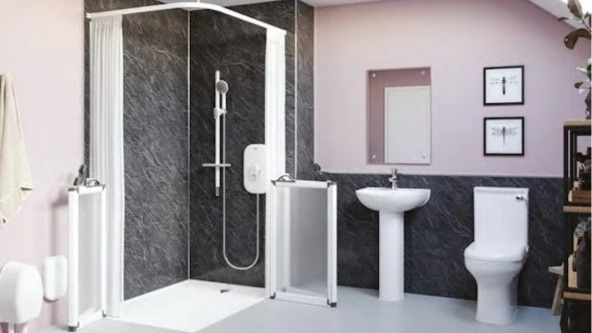
- Accessible bathrooms and wetrooms
- Homes requiring assisted showering
- Multigenerational households
- Smaller UK bathrooms where openness matters
When Might They Not Be Suitable?
They may be less suitable where:
- Maximum water containment is essential
- High privacy is required
- The bathroom layout cannot effectively manage drainage
In these cases, full-height enclosures may be more appropriate.
Quick Decision Guide
Half-height doors → best for accessibility, assisted use, and flexibility
Full-height enclosures → best for water containment and privacy
Can You Install Them in an Existing UK Bathroom?
Yes — and in most UK homes, this is the typical approach.
They are commonly installed as part of bathroom adaptations or wetroom conversions. As long as drainage and layout are considered, they can be integrated into both new and existing bathrooms.
Explore Your Options
If you are designing or adapting a bathroom, the right shower door choice can significantly affect how the space works.
Explore half-height shower door solutions →
Or speak to our team to find the right solution for your needs.
FAQs
What are half-height shower doors?
They are partial-height shower enclosures designed to improve access and usability in accessible bathrooms.
Are half-height shower doors suitable for disabled users?
Yes. They are widely used in accessible bathrooms, particularly where assisted showering is required.
Do half-height shower doors stop water from escaping?
They help manage water, but effective control depends mainly on floor design and drainage.
Are they better than full-height enclosures?
They are better for accessibility and assisted use, while full enclosures provide greater water containment and privacy.
What is the best material for shower doors?
Glass offers a premium finish, while PET offers greater durability and practicality.
Final Thought
A bathroom should support its real-life use.
Half-height shower doors are not about replacing full enclosures. They are about creating a space that is easier to access, safer to use, and more adaptable to different needs.
When combined with good layout and drainage, they offer a flexible and practical solution for modern accessible bathrooms in the UK.