


What Are Height-Adjustable Wall Cabinets?
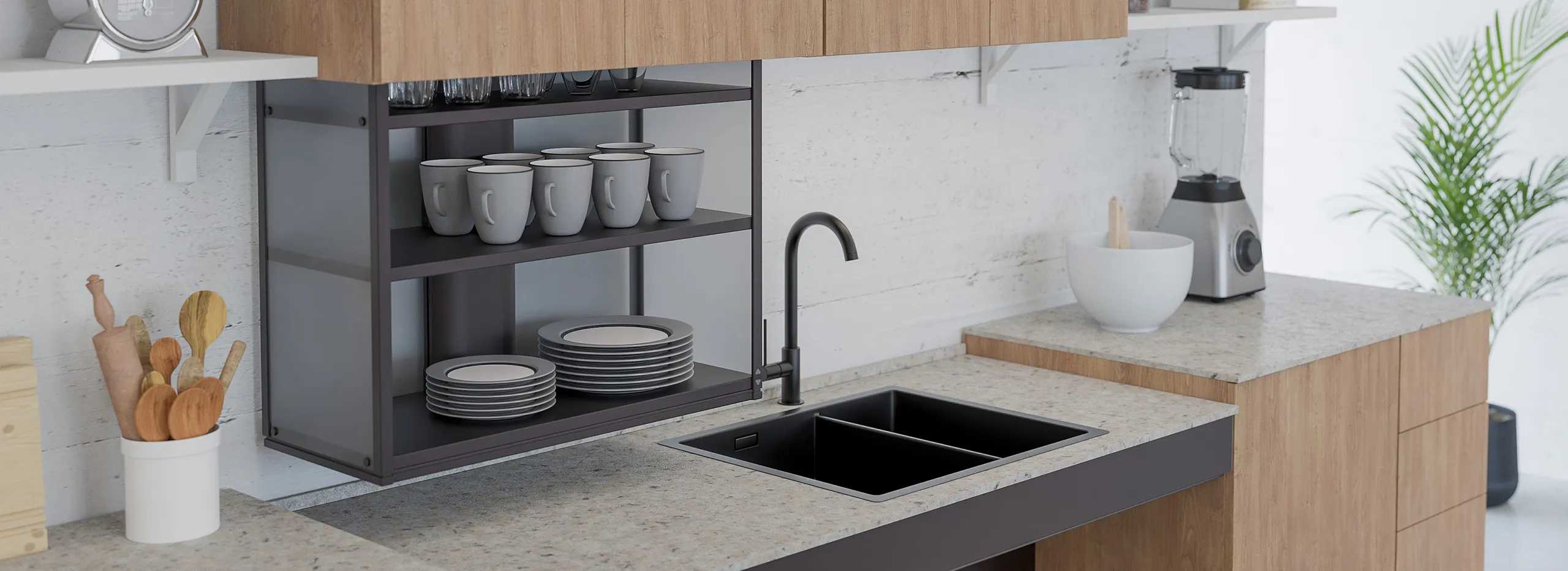
Accessible Kitchens
What Are Height-Adjustable Wall Cabinets?
A Practical UK Guide to Accessible Kitchen Storage
Summary
Height-adjustable wall cabinets are kitchen cupboards that can be raised or lowered to bring their contents within easy reach. They improve accessibility by enabling seated, wheelchair, and standing users to access storage safely and independently.
What Are Height-Adjustable Wall Cabinets?
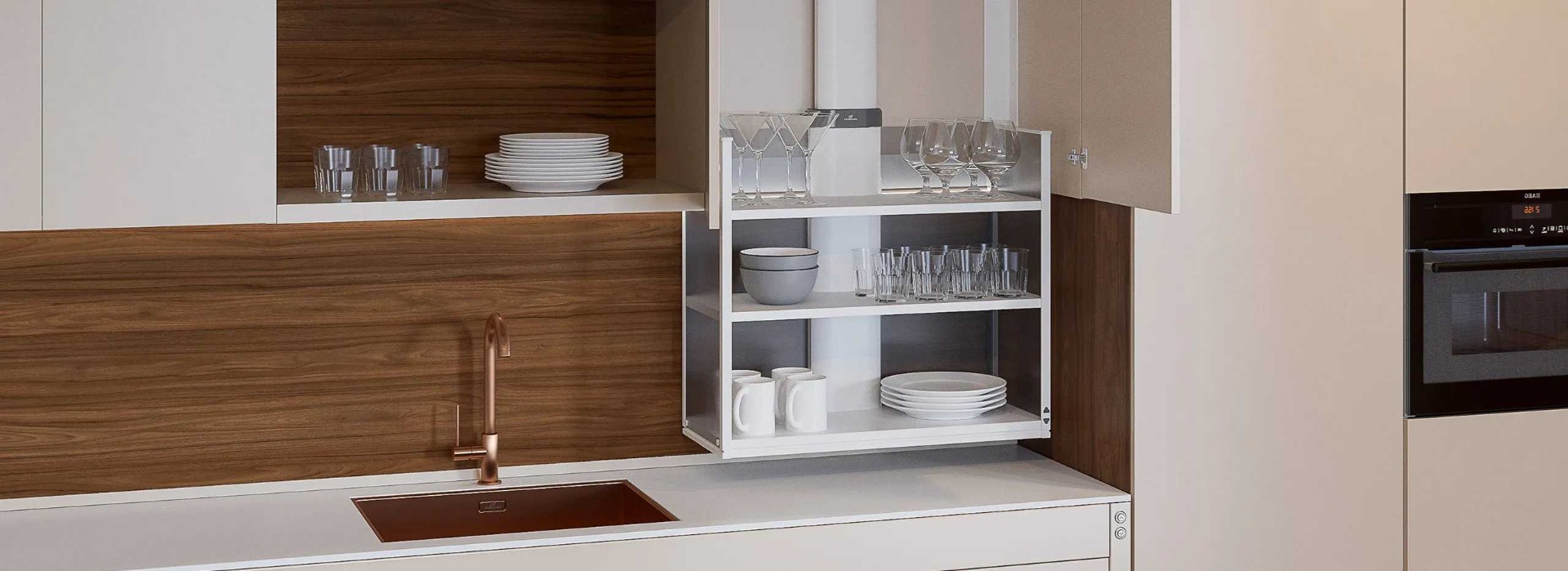
Height-adjustable wall cabinets are kitchen cupboards that can be lowered or raised to bring contents within easy reach, improving safety, accessibility, and independence.
Unlike standard wall cabinets, which are fixed in place, these systems adapt to the user. This makes them a key part of accessible kitchen design in the UK, particularly in homes where reach, mobility, or strength varies between users.
In practice, they align with guidance such as Part M of the Building Regulations → and BS 8300 →, while still maintaining a clean, modern kitchen aesthetic.
Why Are Standard Wall Cabinets a Problem?
In most UK homes, wall cabinets are positioned for standing users. For many people, that works. For others, they quickly become one of the least usable parts of the kitchen.
For wheelchair users or seated users, wall cabinets are often completely out of reach. Even for standing users, accessing higher shelves can require stretching, which increases strain and reduces safety.
Over time, this leads to a common outcome: valuable storage space is there, but effectively unusable.
In real kitchens, this often results in:
- Items being moved to less practical locations
- Overuse of lower storage areas
- Increased reliance on others for access
Accessible design focuses on recovering that lost storage and turning it back into something that works day to day.
How Do Height-Adjustable Wall Cabinets Improve Accessibility?
Height-adjustable systems change one key thing: they bring storage down to the user.
This directly impacts how the kitchen is used. Items that were previously difficult or unsafe to access become easy to reach, and everyday tasks feel more manageable.
In practice, this often leads to:
- Greater independence for seated users and wheelchair users
- Reduced strain for standing users
- Safer, more controlled access to everyday items
There is also a wider impact. Regaining access to previously unusable space can improve confidence and make the kitchen feel fully usable again, rather than partially restricted.
For carers, these systems also allow better positioning when assisting, reducing awkward reaching and improving overall safety during shared use.
What Types of Height-Adjustable Wall Cabinets Are Available?
Electric Wall Cabinet Lifts
Electric systems offer the highest level of flexibility and ease of use.
At the touch of a button, cabinets can be raised or lowered without physical effort. This makes them particularly suitable for users who require independent access or who adjust the height regularly throughout the day.
In UK homes, these are often chosen where accessibility and long-term usability are priorities.
→ Explore electric wall cabinet lift solutions for independent access
Here are the three most common types of electric wall cabinet lift:
Diagonal Lift Systems (e.g. Granberg Diago)
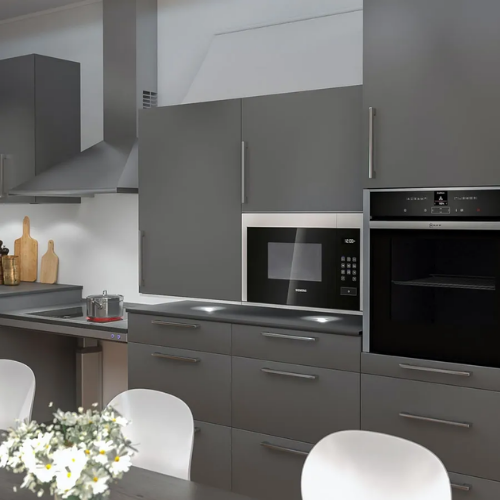
Diagonal systems move the cabinet forward and downward towards the user.
This motion improves both reach and visibility by bringing items closer to the front edge of the worktop. In practice, this reduces the need to lean forward and makes access feel more natural.
These usually lower the whole cabinet, as with the Granberg Diago.
Vertical Lift Systems (e.g. Granberg Verti)
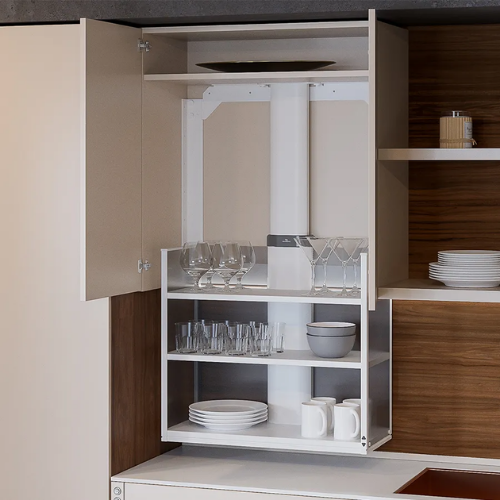
Vertical systems lower shelves straight down while keeping them aligned with the cabinet.
They are compact and well-suited to kitchens where space is limited, and they are often easier to retrofit into existing UK kitchen layouts.
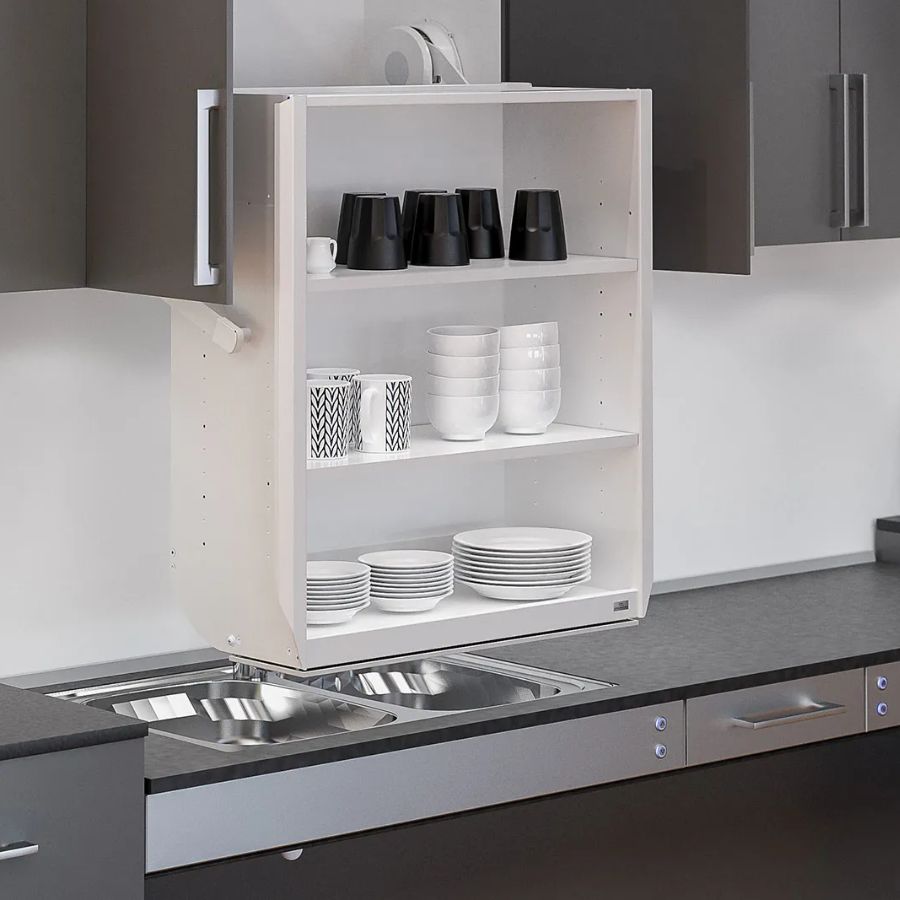
Curved / Advanced Lift Systems (e.g. Granberg InDiago)
Advanced systems use a curved motion to bring the cabinet forward and down in a smooth arc.
They often include features such as automated door opening and enhanced safety systems, creating a more seamless user experience. These systems are typically chosen where convenience, independence, and ease of use are key priorities.
These usually lower only the internal contents of the cabinet, as with the Granberg InDiago.
Manual Pull-Down Systems
Manual systems provide a more cost-effective alternative.
They use gas-assisted mechanisms to lower shelves when pulled, allowing improved access without powered movement.
In practice, these systems are:
- More affordable
- Suitable for standing users with moderate reach limitations
- Less effective for seated users, depending on travel distance
It is important to note that some physical effort is required, particularly when returning the shelves to their original position.
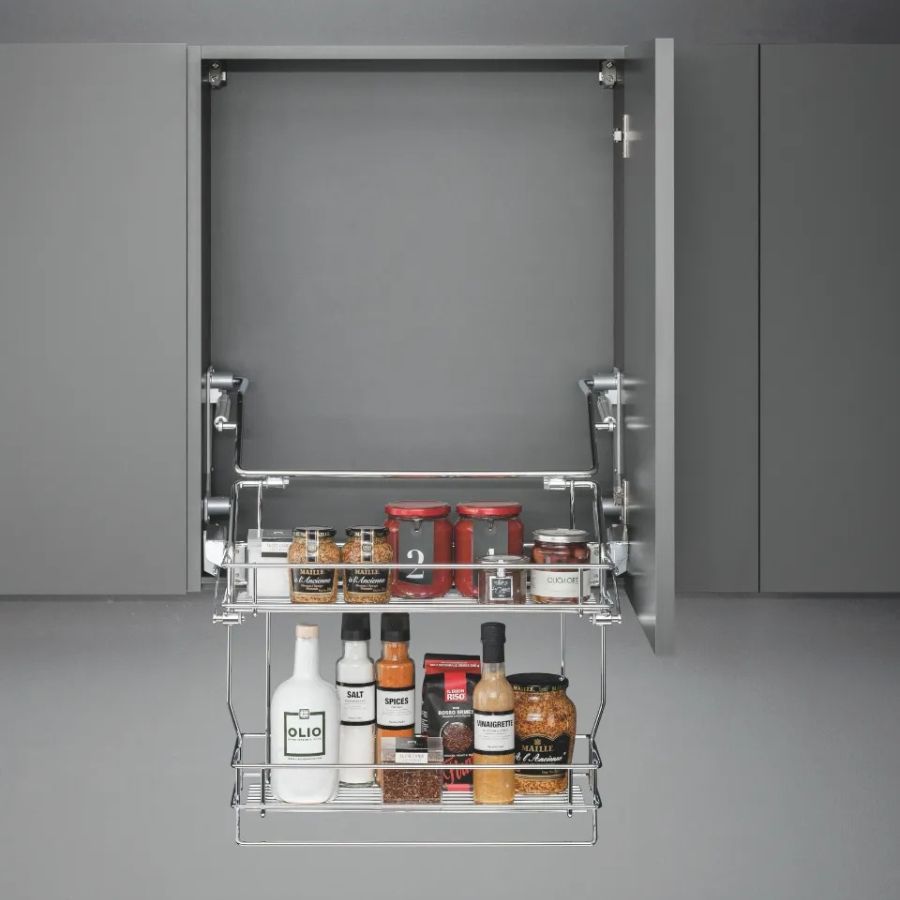
Wire Basket Systems (e.g. Vibo)
Wire basket systems provide a lightweight, practical solution with good visibility.
They are often used for everyday items and where simplicity and cost are key considerations.
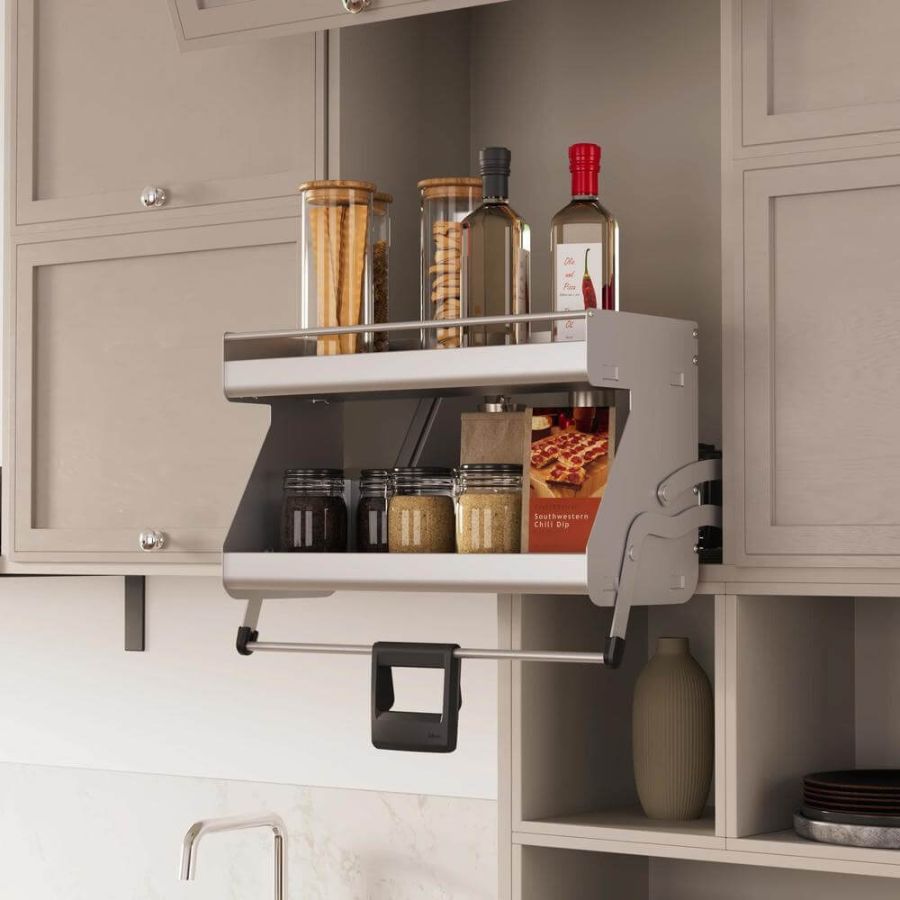
Shelf-Based Systems (e.g. Kesseböhmer iMove)
Shelf-based systems offer a more refined design and clean aesthetic.
However, many have a shorter travel distance, meaning they may not bring contents low enough for seated users. They are typically better suited to standing users who need assistance reaching higher storage.
Which Type Should You Choose?
A simple way to compare:
- Electric systems → best for independence and frequent use
- Diagonal/advanced systems → best for reach and visibility
- Vertical systems → best for compact spaces and retrofits
- Manual systems → best for lower cost and occasional use
In most UK kitchens, the decision comes down to how often the system will be used and whether independent operation is required.
What Safety and Installation Considerations Matter?
Safety is an important part of any moving cabinet system.
Most electric lifts include safety stop mechanisms that prevent movement if an obstruction is detected, helping to protect both the user and the contents.
Installation is equally important. Cabinets must be securely fixed and correctly positioned to ensure safe, long-term use, particularly in line with UK best practice standards such as Part M and BS 8300 guidance.
Can You Install These Systems in an Existing UK Kitchen?
Yes — and in most UK homes, this is how they are introduced.
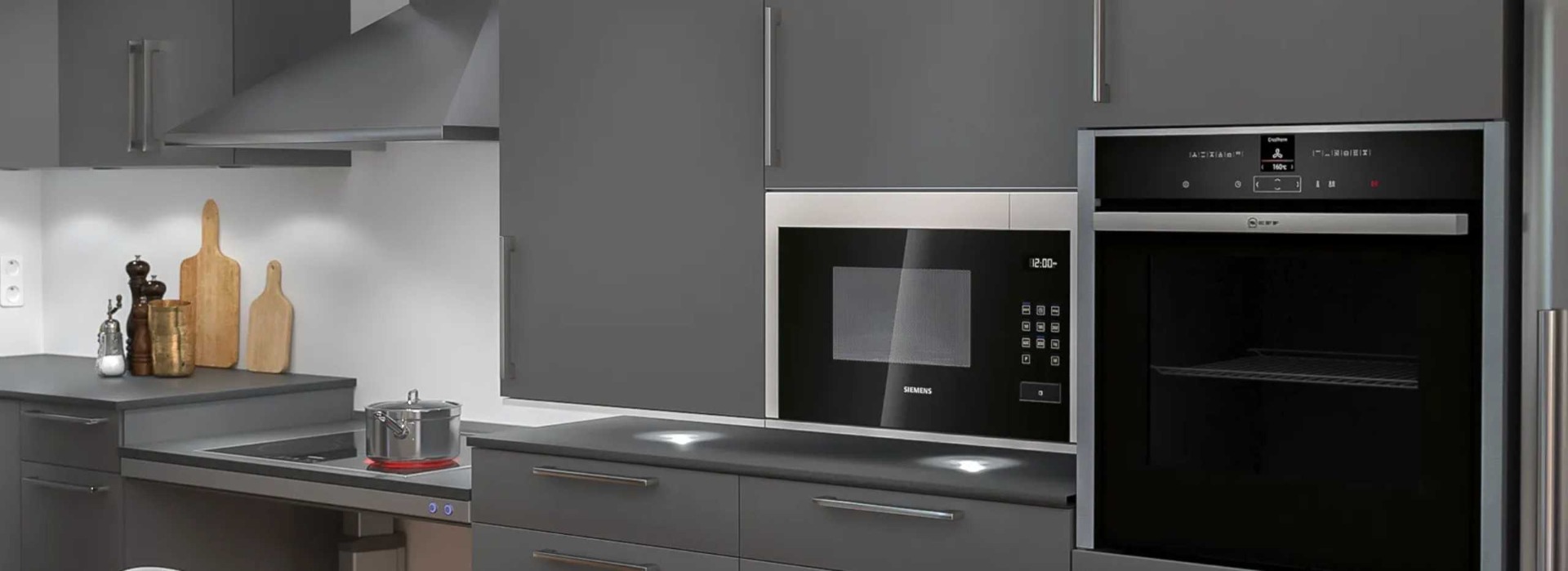
Many systems can be retrofitted into existing cabinets, although some internal modification may be required. This makes it possible to improve accessibility without needing a full kitchen redesign.
In practice, even a single adjustable cabinet can significantly improve how the kitchen functions.
Read more about retrofitting →
How Do You Choose the Right Solution?
Choosing the right system depends on how the kitchen is used in real life.
One of the most common mistakes is focusing purely on cost. While budget matters, factors such as independence, ease of use, and long-term usability often have a greater impact.
Consider:
- Who needs to use the cabinet
- Whether independent operation is required
- How often adjustments will be made
- Whether the system needs to work within an existing UK kitchen
Taking these into account ensures the solution supports everyday use, not just specification.
Explore Your Options
If you are planning an accessible kitchen, improving wall cabinet access can unlock storage that would otherwise go unused.
Explore height-adjustable wall cabinet systems →
Explore manual pull-down solutions →
Or speak to our team to find the right solution for your kitchen.
FAQs
What are height-adjustable wall cabinets?
They are kitchen cabinets that can be lowered or raised to bring contents within easy reach, improving accessibility.
Are height-adjustable cabinets suitable for wheelchair users?
Yes. Electric systems can lower contents to a usable height, making them ideal for wheelchair users.
What is the difference between electric and manual systems?
Electric systems operate at the press of a button, while manual systems require physical effort to adjust.
Can these systems be installed in existing kitchens?
Yes. Many systems can be retrofitted into existing cabinets with the correct installation.
Are pull-down shelves suitable for seated users?
Some are, but many manual systems do not lower far enough. Electric systems are usually more suitable.
Final Thought
Standard wall cabinets often represent unused potential in a kitchen.
Height-adjustable systems change that by bringing storage back into reach, making the space more usable, more efficient, and more inclusive.
The result is not just better storage, but a kitchen that feels easier to use and more supportive of everyday life.
Explore the difference →

Continue Learning
Want to understand the thinking behind these products? Explore our practical Accessibility School guides.
- Retrofitting Accessibility: How to Adapt Your Home Without Starting Again →
- What Is Reach Range? →
- What Is an Adapted Kitchen? →