


What Is an Electric Worktop Lift?

Accessible Kitchens
What Is an Electric Worktop Lift?
A Practical UK Guide
Summary
An electric worktop lift is a height adjustable kitchen system that raises and lowers a work surface at the touch of a button, improving accessibility and usability for different users.
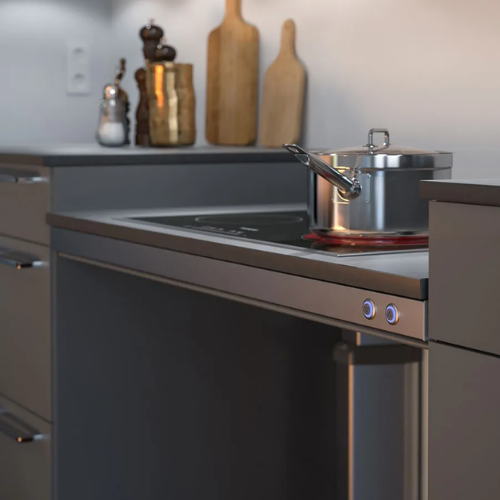
What Is an Electric Worktop Lift?
An electric worktop lift, also known as a rise and fall worktop, allows a kitchen surface to move up or down using an electric motor.
Unlike fixed worktops, it adapts to the user. This means a seated user, wheelchair user, or standing user can all use the same kitchen comfortably.
In accessible kitchens in the UK, electric worktop lifts are one of the most effective ways to create a space that supports independence without compromising usability or design.
Why Choose an Electric Worktop Lift?
The key advantage is flexibility.
In most kitchens, worktops are fixed at a single height. This often works for one person, but creates limitations for others. In shared households, this can become a daily compromise.
Electric systems remove that barrier.
At the press of a button, the worktop adjusts to suit the user, allowing the kitchen to work for everyone.
In practice, this often means:
- Better access for wheelchair users
- Reduced strain for seated and standing users
- Easier shared use in multigenerational households
- Greater independence in everyday kitchen tasks
This is where the real value sits; not just in movement, but in restoring control over how the space is used.
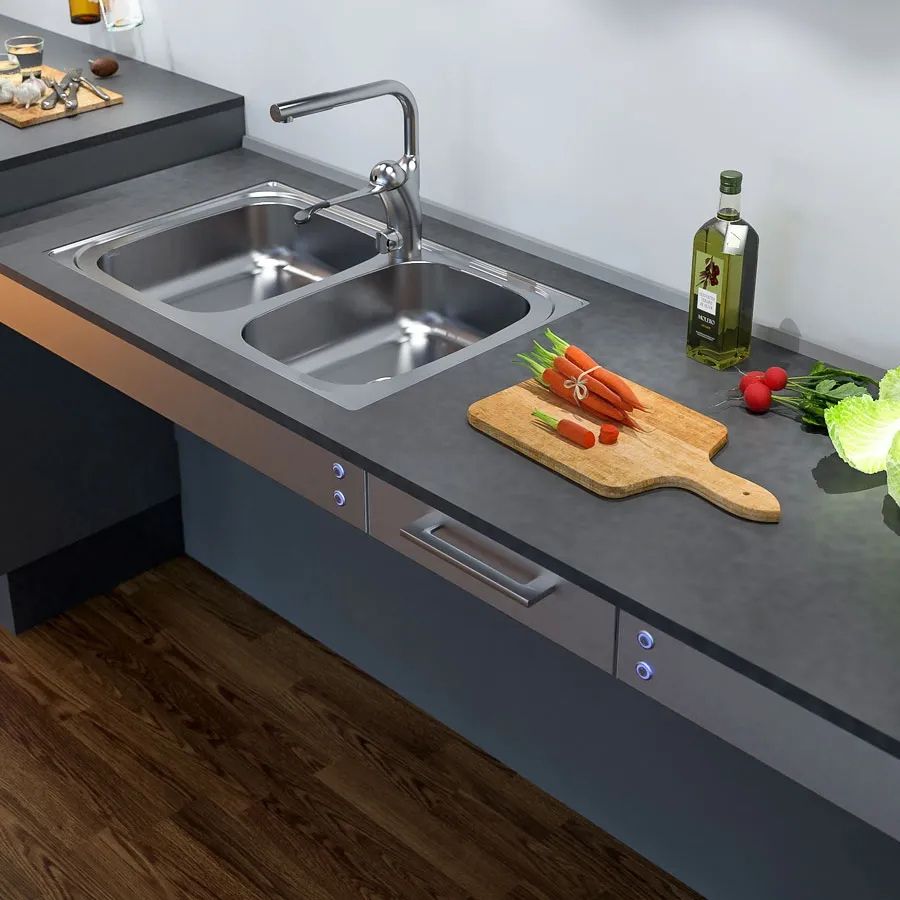
When Is an Electric Worktop Lift the Right Choice?
Electric worktop lifts are typically the best option where:
- The worktop height needs to change regularly
- Independent adjustment is important
- The kitchen is used by multiple people
- Accessibility needs may change over time
In practice, once installed, electric systems are rarely replaced, because the improvement in usability and independence is immediate and long-term.
Electric vs Manual Worktop Lifts: Which Is Better?
A simple comparison:
- Electric worktop lifts → best for independence, frequent adjustment, shared kitchens
- Manual worktop lifts → best for occasional adjustment and lower-cost projects
Manual systems can work well in controlled environments, but where independence matters, electric systems are usually the stronger long-term solution.
→ Read about manual worktop lifts → Explore electric worktop lifts
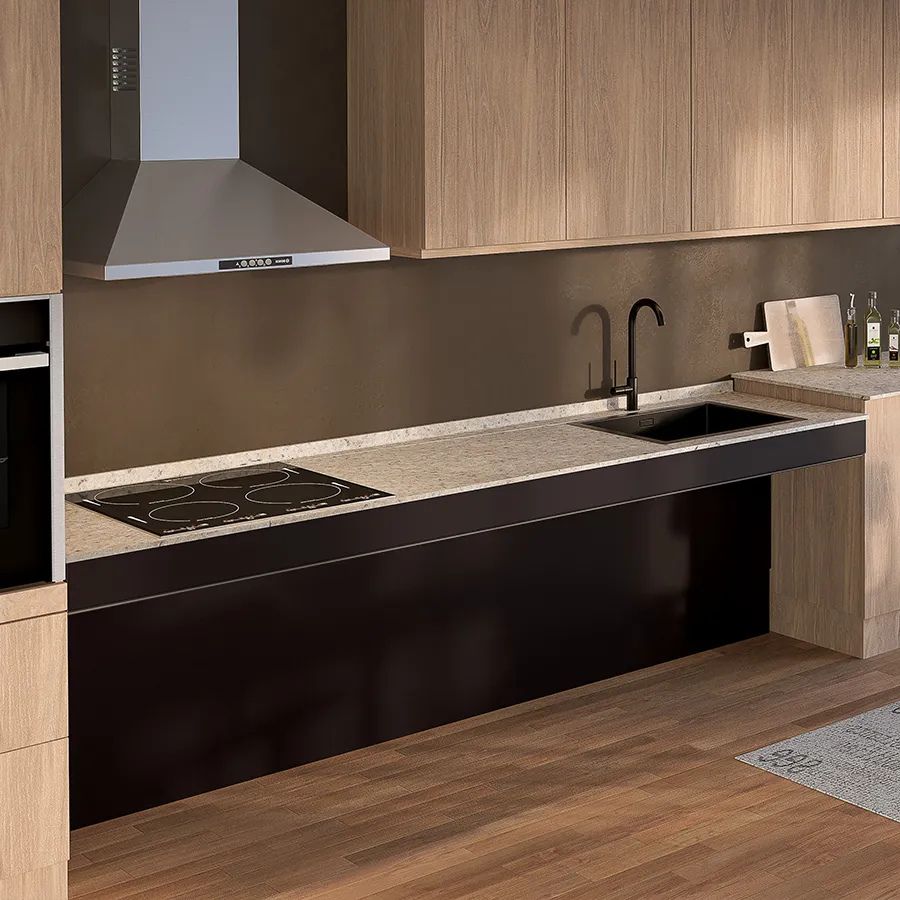
What About Cost?
Electric systems are more expensive than manual alternatives, both in terms of product and installation.
However, in UK home adaptations, they are often chosen because they:
- Reduce the need for future modifications
- Support long-term independence
- Improve usability for multiple users
In practice, they are often seen as an investment in long-term accessibility, rather than a short-term solution.
What Types of Electric Worktop Lifts Are Available?
To simplify selection, it helps to group them by layout and function.
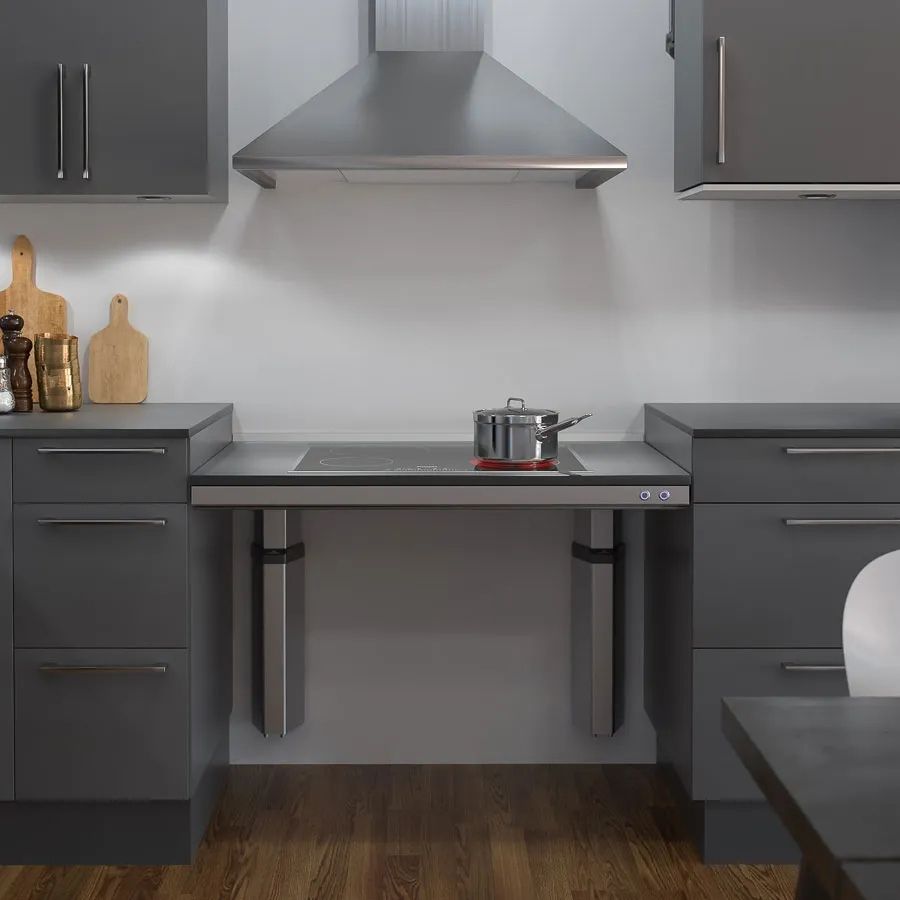
Straight Worktop Lifts (Baselift 6300 / 6310)
These are the most common systems and are used for straight runs.
- 6300 → wall-mounted
- 6310 → floor-mounted
They are typically used for:
- Sink areas
- Hob areas
- General food preparation
In practice, these form the core of most accessible kitchen layouts.
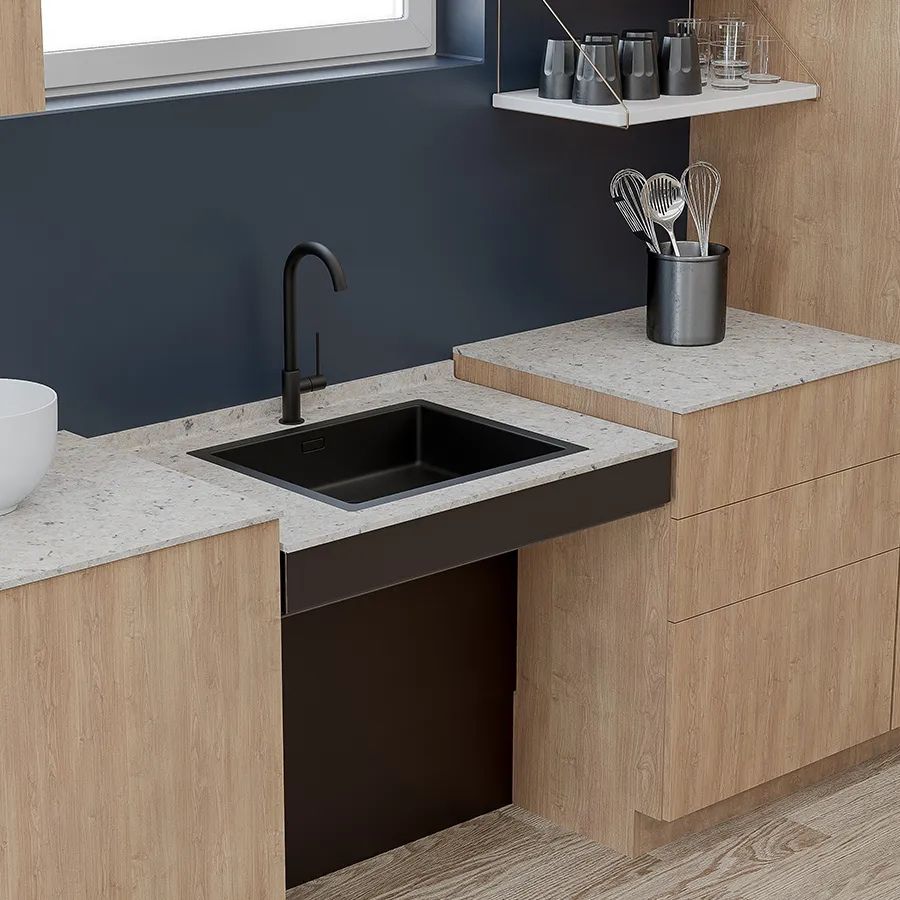
Kit System Worktop Lifts (Baselift 6600)
A new, straight height-adjustable worktop system, available in white as well as anthracite, as pictured above.
With a focus on design, the 6600 also has a 160kg weight limit, higher than the 6300/6310's 100kg weight limit. It also comes in a kit system, which includes the fascia.
However, unlike the 6300/6310, it cannot be customised to include a drawer, and is wall-mounted only.
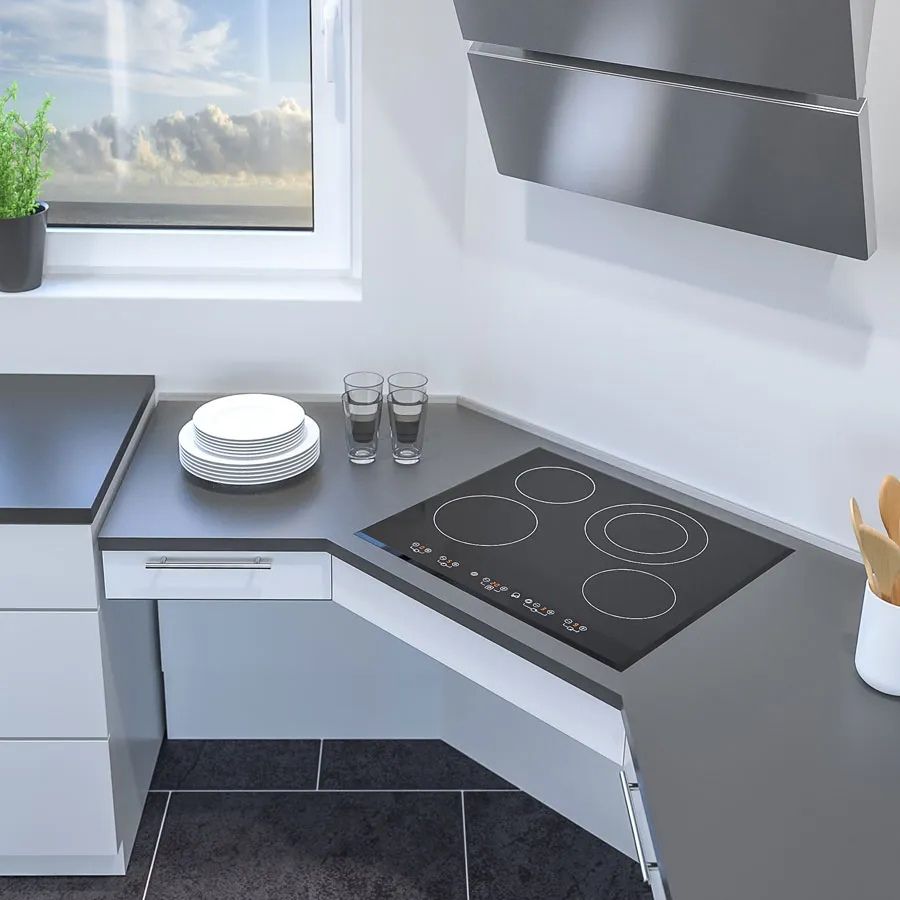
Corner Worktop Lifts
Corner modules allow continued accessibility around kitchen corners, which is often difficult in standard designs.
6301 / 6311 (45° front, 90° wall) →
- Improves access into the corner
- Suitable for sinks or hobs
6302 / 6312 (45° front, 45° wall) →
- Maximises corner space
- Keeps adjacent worktops clearer
6303 / 6313 (90° front, 90° wall) →
- Better for compact kitchens
- Maintains traditional layout
- Less suitable for sink/hob placement in the corner
In practice, the right choice depends on how the corner will actually be used, not just how it looks on plan.
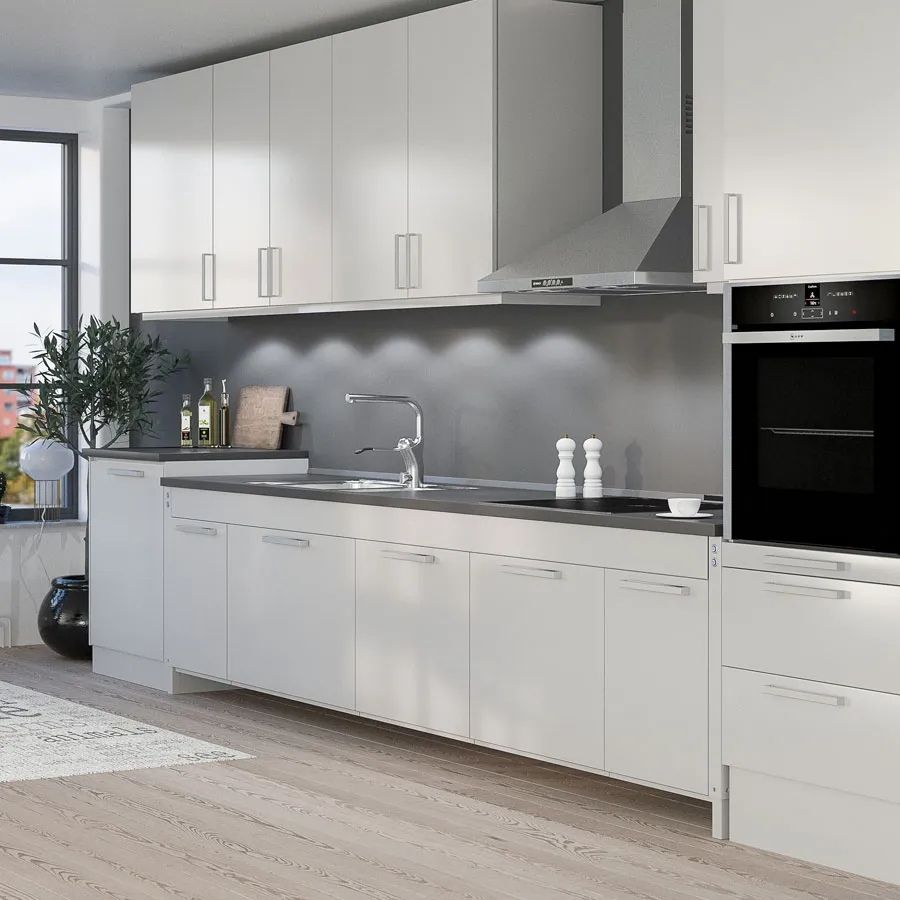
Sidelift 6400 (Heavy-Duty System)
The Sidelift 6400 offers a significantly higher lifting capacity of up to 400kg.
Its key advantage is compatibility with hanging cabinets beneath the worktop, allowing storage to be retained.
This makes it particularly useful for:
- Storage-heavy kitchens
- Schools or commercial environments
- Situations where durability is critical
What Is a Plusmodule?
A Plusmodule extends the width of a worktop lift system, allowing multiple sections to operate as one continuous unit.
This is useful where:
- A longer run of worktop is required
- A seamless working area is preferred
- The kitchen layout spans multiple zones
What Is the Difference Between LA and HA?
LA Frame (≈40mm depth)
- Suitable for worktops and hobs
- Simpler installations
- Sink may protrude below
HA Frame (≈103mm depth)
- Suitable for sinks (especially shallow bowl designs)
- Allows drawers and additional features
- Supports larger, easier-to-use controls
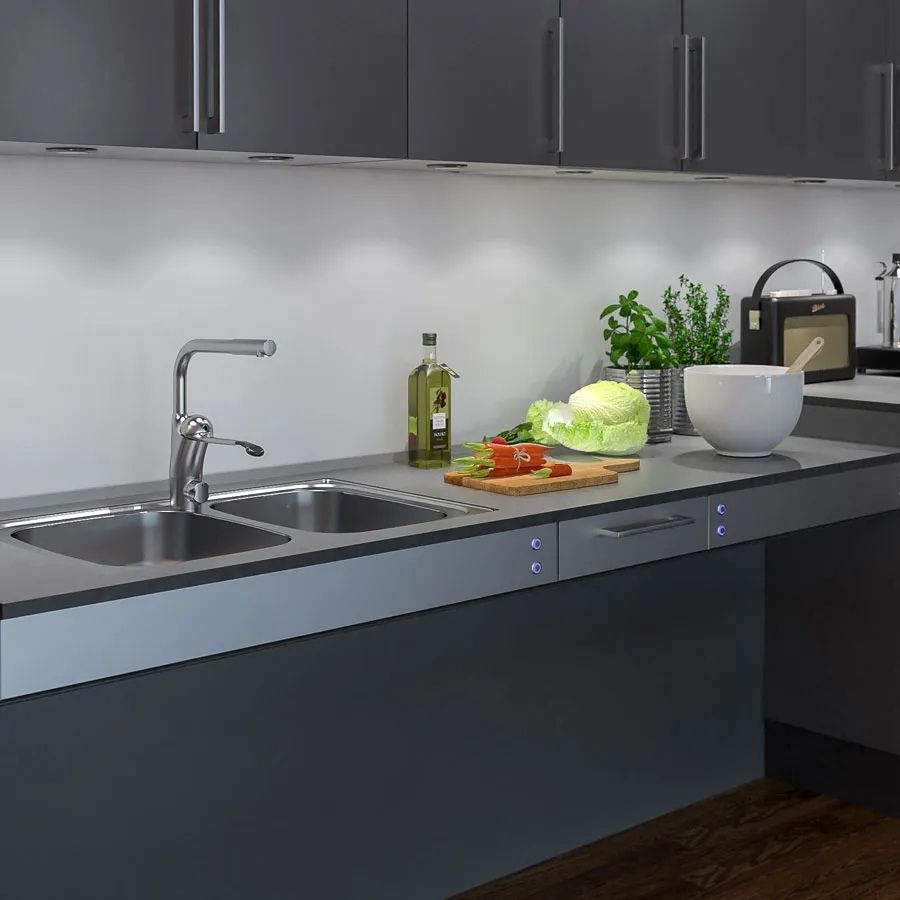
In practice, HA systems provide greater flexibility and are often preferred for everyday kitchens.
What About Controls and Usability?
Control options vary, but typically include:
For users with reduced dexterity, larger controls can significantly improve ease of use.
This is often overlooked at specification stage, but has a direct impact on day-to-day usability.
What About Cover Panels?
Cover panels → improve both safety and finish.
They:
- Conceal pipework and services
- Prevent interference with wheelchair footplates
- Improve the overall appearance
They also allow kitchens to feel integrated and considered, rather than adapted as an afterthought.
How Do You Choose the Right System?
The best system depends on:
- Kitchen layout (straight vs corner)
- Mounting feasibility (wall vs floor)
- Integration needs (sink, hob, drawers)
- Storage requirements
- Level of independence required
The most important factor is how the kitchen will be used day to day.
A technically correct system that does not suit the user’s routine will not deliver the intended benefit.
Should You Consider Future-Proofing?
Yes — this is one of the key advantages of electric systems.
In UK homes, needs often change over time. Electric worktop lifts allow the kitchen to adapt without requiring structural changes.
They are particularly valuable in:
- Long-term home adaptations
- Multigenerational households
- Rehabilitation and recovery scenarios
Explore Your Options
→ Explore electric worktop lift systems → See them for yourself in our showroom → Speak to our team for tailored advice
FAQs
What is an electric worktop lift?
A height adjustable kitchen system that raises and lowers a work surface using an electric motor.
Are electric worktop lifts suitable for wheelchair users?
Yes. They improve access and allow the worktop height to be adjusted easily.
What is the difference between LA and HA?
LA is shallower and simpler, while HA allows sinks, drawers, and more features.
Wall-mounted or floor-mounted — which is better?
Wall-mounted is cleaner and more open; floor-mounted is used where walls are not suitable.
What is the best system for storage?
The Sidelift 6400 is the best option where storage below the worktop is required.
Final Thought
An electric worktop lift does more than move a surface.
It changes how a kitchen works, making it more flexible, more inclusive, and easier to use every day.
When the kitchen adapts to the user, rather than the other way around, it becomes a space that supports independence and confidence.
That is what accessible design should achieve.