Accessible Baths: Which Option Is Right for Your Bathroom?
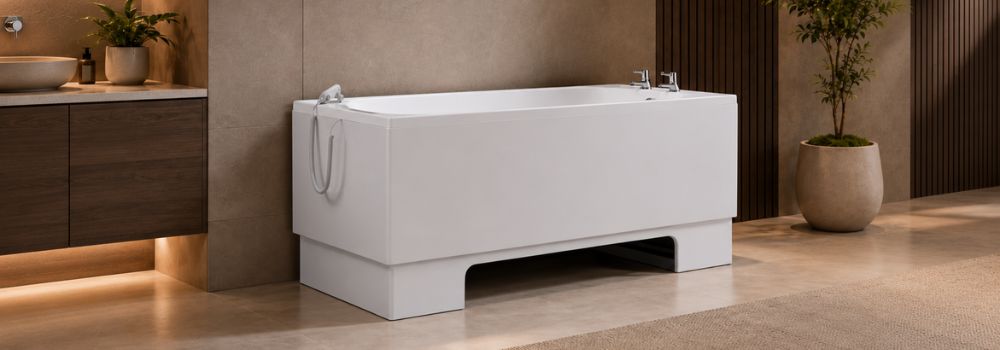
Accessible Bathrooms
Accessible Baths: Which Option Is Right for Your Bathroom?
Accessible baths are designed to make bathing safer, easier, and more comfortable for people with reduced mobility or strength.
Summary
Accessible baths are designed to make bathing safer, easier, and more comfortable for people with reduced mobility or strength.
The main options are:
- Walk-in baths (step-in access through a door)
- Power-assisted baths (height-adjustable and supportive)
- Bath lifts (adapt existing baths)
The right choice depends on your mobility, space, and how you prefer to bathe.
What Is an Accessible Bath?
Definition:
An accessible bath is a bathing solution designed to improve safety, ease of access, and comfort for people with reduced mobility or strength.
In the UK, these are commonly used in:
- Home adaptations
- Rehabilitation settings
- Long-term independent living
In practice, the goal is simple: make bathing safer without taking away comfort or control.
Why This Decision Matters
Bathing is one of the most personal daily routines.
For many people, losing the ability to bathe comfortably can feel like a loss of independence. Equally, choosing the right solution can restore confidence and make the experience enjoyable again.
Which Accessible Bath Is Right for You?
Quick Comparison
| Option | Best For | Key Benefit | Consideration |
|---|---|---|---|
| Walk-in bath | Independent users | Easy step-in access | Must sit while filling |
| Power-assisted bath | Assisted/complex needs | Full support and positioning | Higher cost and space |
| Bath lift | Budget/retrofit | Uses existing bath | Less integrated look |
Expert insight:
In practice, space and layout constraints often determine the final choice as much as mobility needs.
Walk-In Baths
What is a walk-in bath?
A walk-in bath includes a watertight door, allowing users to step in rather than climb over a high edge.
Typical features include:
- Built-in seating
- Slip-resistant surfaces
- Grab rails
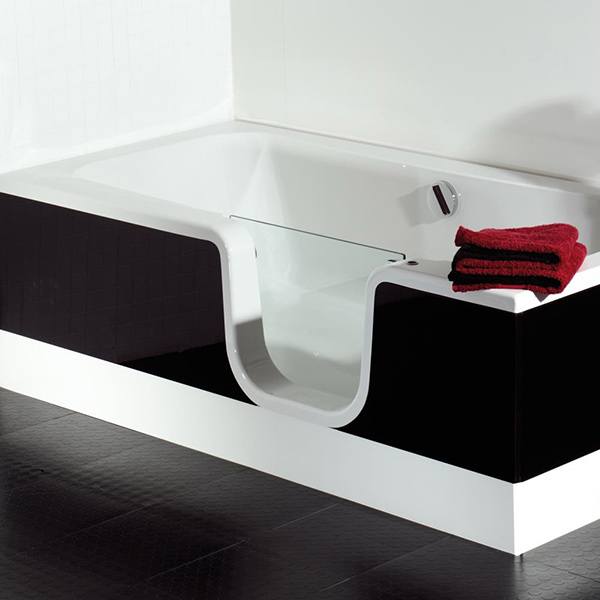
Types of Walk-In Bath Doors
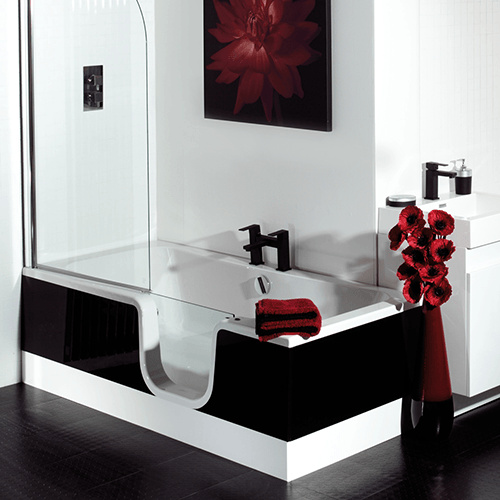
Divided Doors
Open in sections for easier handling and flexibility.
Standard / Full Doors
Provide a wide, simple entry point with inward opening.
Electric Doors
Operate at the push of a button, ideal for limited strength or dexterity.
Manual Doors
Simple, reliable, and cost-effective.
Advantages
- Easier and safer entry and exit
- Reduced fall risk
- Maintains a familiar bathing experience
- Wide range of styles available
Additional features may include:
- Hydrotherapy jets
- Chromotherapy lighting
- Integrated audio
Considerations
- You must enter before filling and wait to drain before exiting
- Higher cost than standard baths
- Requires sufficient bathroom space
- Installation may involve plumbing adjustments
Power-Assisted Baths
What is a power-assisted bath?
A power-assisted bath uses a motorised system to raise, lower, or tilt the bath for safer access and use.
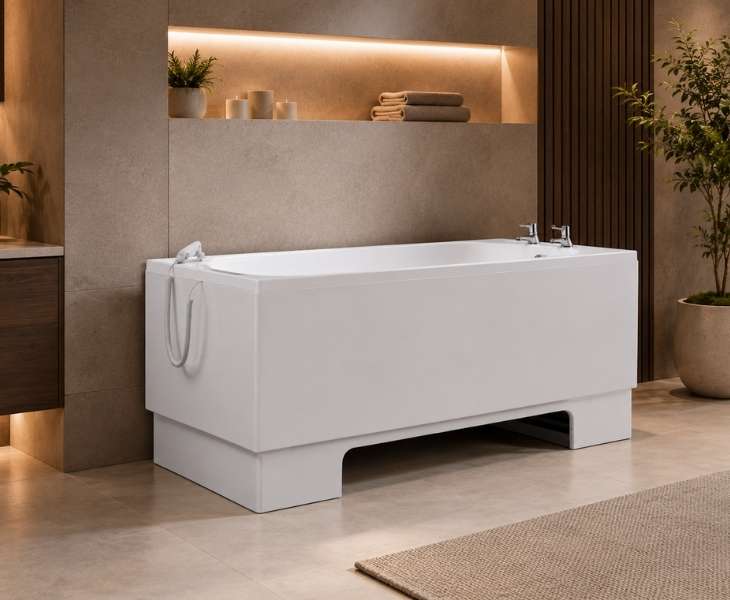
When is it the right choice?
Best suited for:
- Users requiring assistance
- Complex mobility needs
- Carer-supported bathing
Key Features
- Height-adjustable bath position
- Tilting for safer transfers
- Hoist compatibility (where required)
Bath Lifts
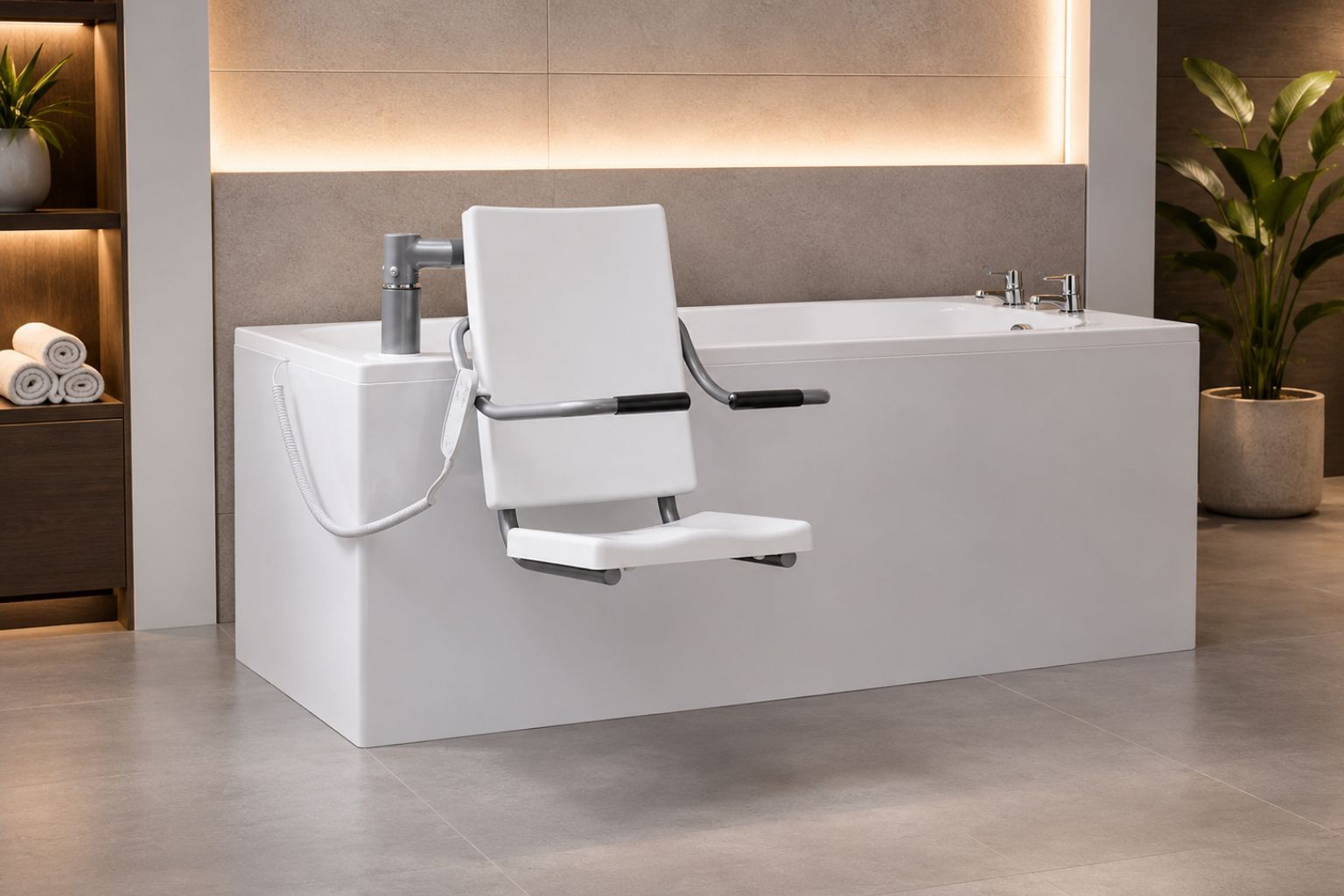
What is a bath lift?
A bath lift is a device installed in a standard bath that safely lowers and raises the user.
When is it the right choice?
Ideal if:
- You want to adapt an existing bath
- You need a cost-effective solution
- You want minimal disruption
Advantages
- Improves access without replacing the bath
- Easy to install and remove
- More affordable than full replacements
- Suitable for temporary or changing needs
Considerations
- More visible than built-in solutions
- May limit movement or positioning
- Requires compatible bath size
- Needs charging or power
Full Panel vs Hoist Access
Full panel: direct access
Hoist panel: allows mobile hoist positioning
Advantages
- Maximum support and accessibility
- Safer for both user and carer
- Reduces physical strain
Considerations
- Higher upfront investment
- Requires more space
- Dependent on power supply
- More complex installation
In practice, these are often chosen where long-term care needs are a priority.
What About Space and Installation?
Before choosing, consider:
- Bathroom size and layout
- Door clearance and access
- Plumbing adjustments
- Structural support
In UK homes, retrofit constraints often influence the final decision as much as user needs.
Bath vs Shower: Which Is Better?
In some cases, a bath may not be the best solution.
Level-access showers are often preferred when:
- Mobility is significantly reduced
- Step-free access is essential
- Space is limited
Baths are still ideal for:
- Relaxation and therapy
- Personal preference
- Users who want a seated bathing experience
The right choice depends on how you want to use the space day-to-day.
What About Cost?
Typical cost hierarchy:
- Bath lifts → lowest cost
- Walk-in baths → mid-range
- Power-assisted baths → higher investment
However, the right solution can reduce long-term care needs, and prevent future costly adaptations.
Real-World Impact
The right bathing solution can:
- Restore independence
- Reduce risk of injury
- Support carers
- Make bathing enjoyable again
For many people, being able to safely take a bath again is a major milestone.
FAQs
What is the best bath for elderly users?
Walk-in baths or bath lifts are often most suitable.
Are walk-in baths worth it?
Yes, if safe and easy access is a priority.
What is the cheapest accessible bath option?
Bath lifts are typically the most cost-effective.
Do walk-in baths get cold while filling?
They can, as users sit inside while the bath fills.
Are power-assisted baths necessary?
Only for more complex mobility or care needs.
Final Thought
Accessible baths are not one-size-fits-all.
The right choice depends on your mobility, your space, and how you want to bathe.
When chosen carefully, the right solution allows you to keep bathing safe, comfortable, and independent, on your terms.

Continue Learning
Want to understand the thinking behind these products? Explore our practical Accessibility School guides.
- What Is an Adapted Bathroom? →
- How Do You Design an Accessible Multigenerational Home in the UK? →
- Designing an Accessible Home from Scratch →